Water Treatment for Hospitals: Cooling Towers, Steam and Legionella Programs
By Hydrovida ·
In most buildings, a water problem is a maintenance problem. In a hospital, it's a patient-safety problem, a survey problem and an uptime problem all at once. A chiller that scales up in August, a boiler that fails during a cold snap or a cooling tower that grows Legionella can affect patients, staff and your accreditation.
Most hospital teams already know Legionella matters. What gets less attention is that the cooling towers, boilers and closed loops behind the Legionella plan each need their own treatment program, and each one leaves records that a surveyor may ask to see.
Here's what a complete hospital water treatment program covers, system by system, and what to ask your provider.
The four systems a hospital program has to cover
Most hospital central plants have the same core water systems:
- Cooling towers and chillers. They reject heat from the building and are a known Legionella risk.
- Boilers and steam. They supply heating, sterilizers and, in many hospitals, humidification.
- Closed loops. Chilled water and hot water piping that moves energy around the building.
- The water management program. The plan, testing and records that tie it all together.
A good program treats these as one connected system. A gap in one usually shows up somewhere else.
Cooling towers and chillers
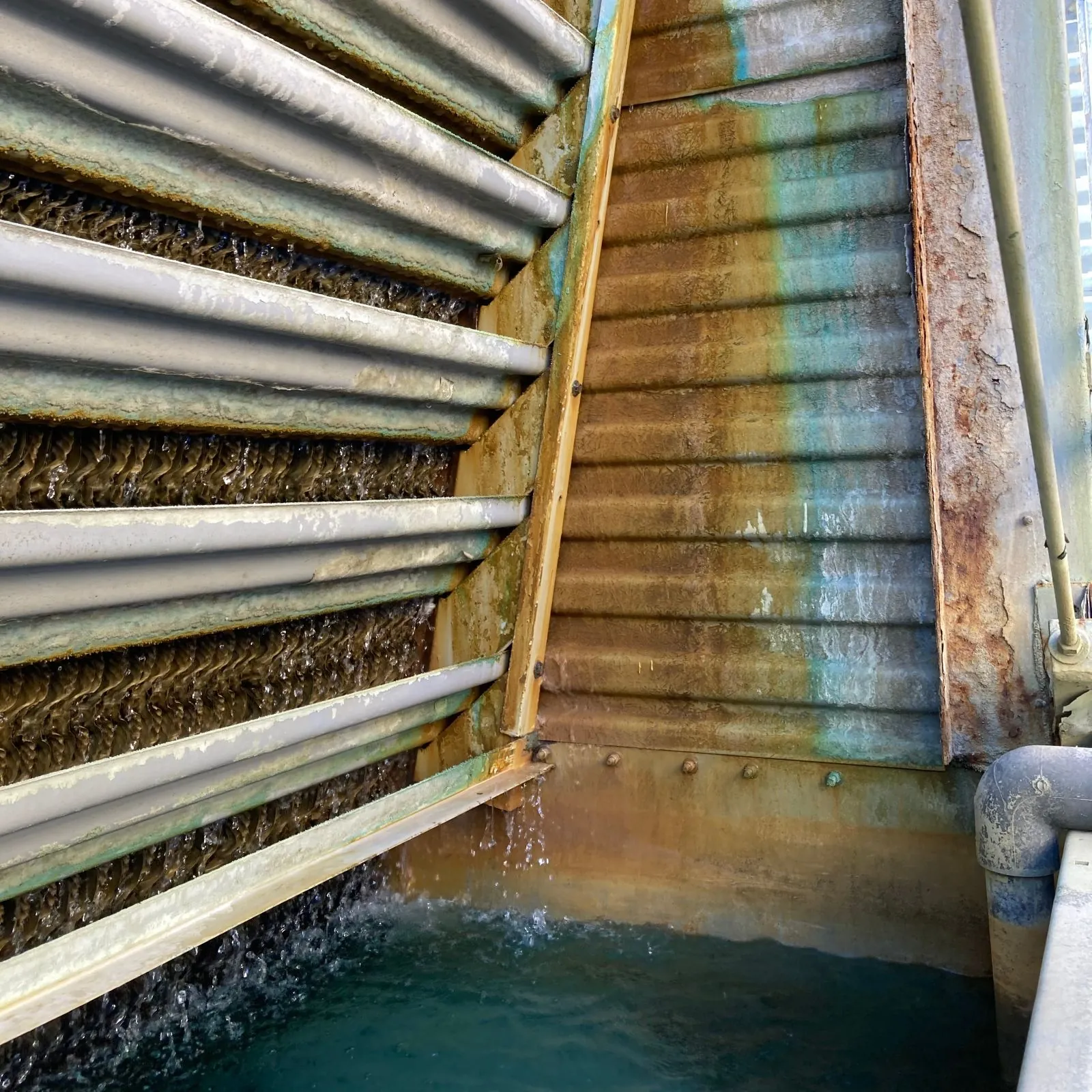
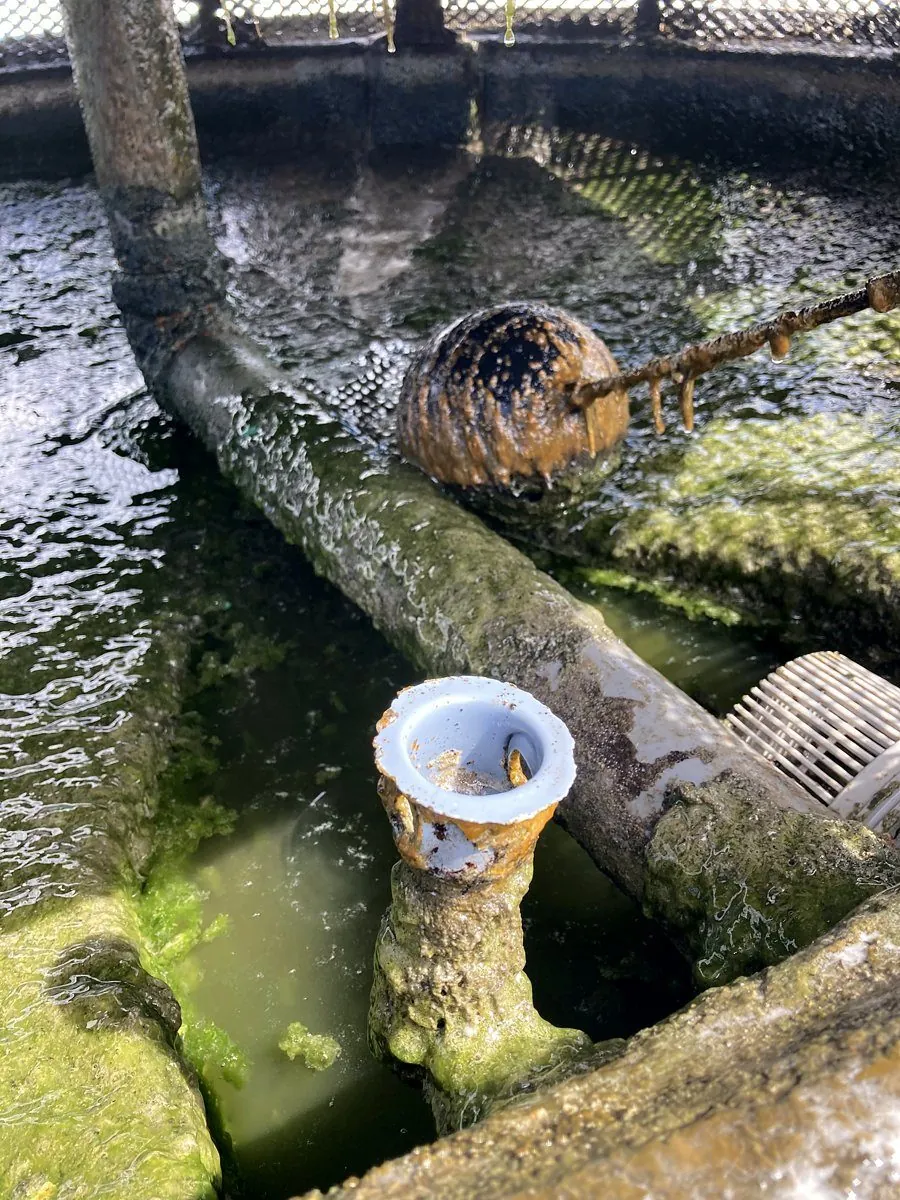
A cooling tower works by evaporating water. The minerals left behind concentrate in the tower and can form scale on chiller tubes. Scale acts like insulation, so the chiller works harder to move the same heat. Warm, aerated tower water is also a good home for bacteria and biofilm.
For a hospital tower, the program should include:
- Scale and corrosion control, so chiller tubes and tower metal stay clean and intact.
- A biocide program built for a high-risk building, with biocide levels tested on every visit.
- Conductivity control and bleed-off, so the tower runs at safe cycles of concentration. We explain the math in Cycles of Concentration: The Number That Decides Your Cooling Tower Water Bill.
- Regular Legionella testing and a written plan for what happens if a result comes back positive.
- Cleaning when sludge, scale or biofilm build up.
Cooling towers can spread contaminated mist beyond the building, which is why they're a key control point in any hospital water management program. More on our cooling tower water treatment.
Boilers and steam
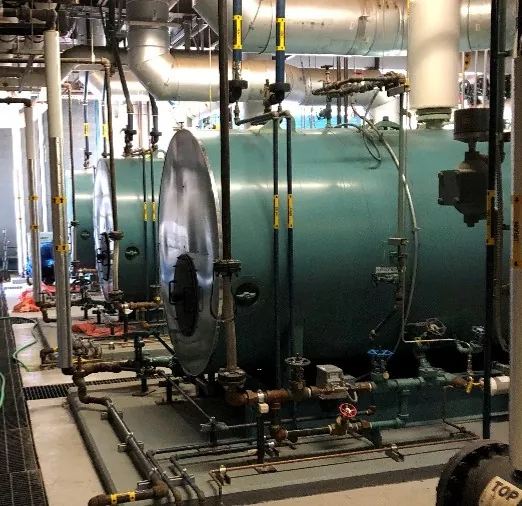
Hospital boilers often do more than heat the building. Steam may also feed sterilizers, kitchens and humidifiers. Each use matters for how the boiler is treated.
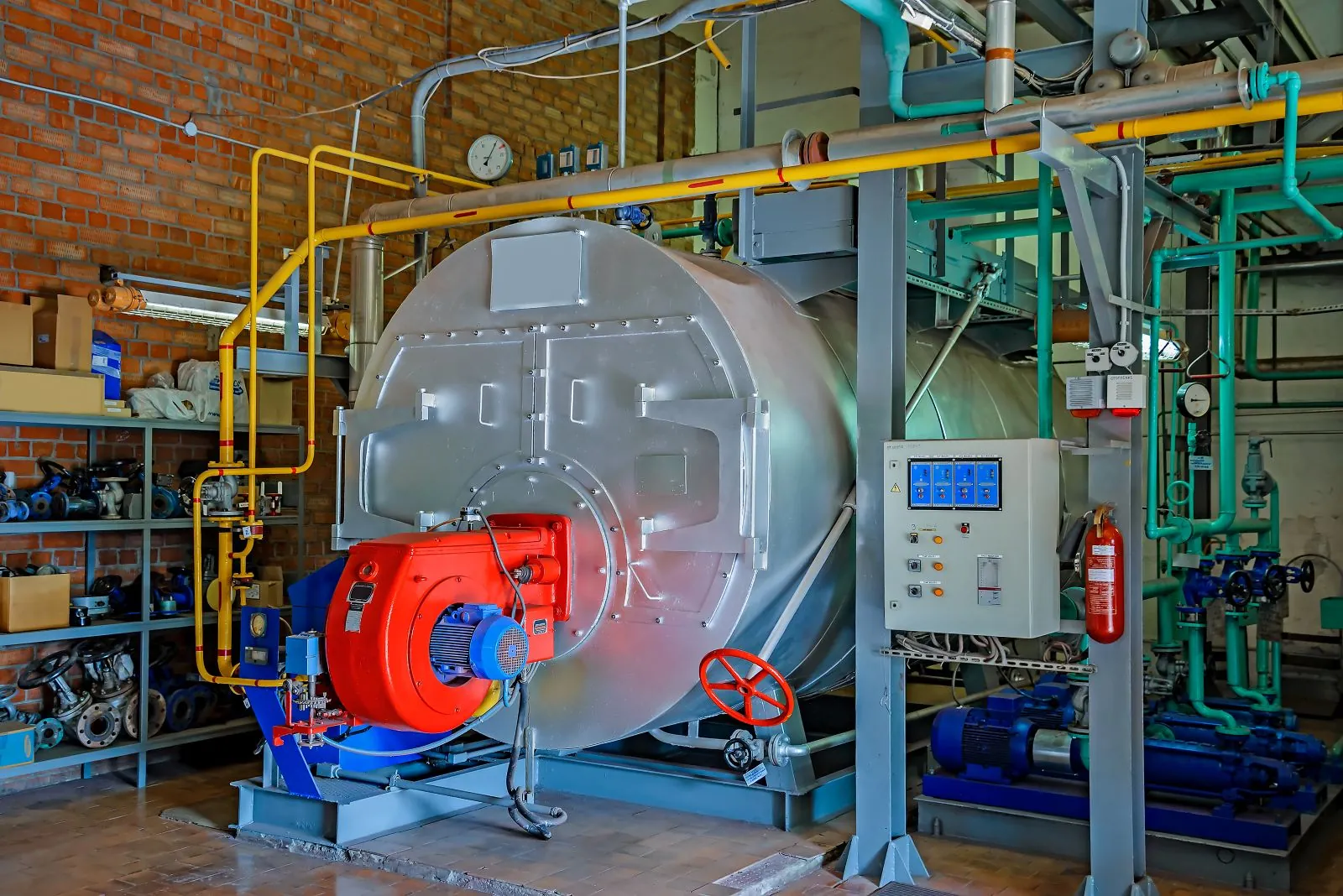
Inside the boiler, the goals are the same as anywhere: keep scale off the tubes, keep oxygen out and prevent corrosion. A failed boiler in a hospital can't wait for next week's service call.
In the condensate system, many boiler programs use chemicals called neutralizing amines. They travel with the steam and protect condensate piping from acid corrosion.
In humidification steam, those same chemicals can end up in the air. ANSI/ASHRAE/ASHE Standard 170, the ventilation standard for healthcare facilities, says chemical additives in steam systems that serve humidifiers must comply with FDA requirements (ACHR News on Standard 170). The FDA's list of approved boiler water additives, including limits for amines in steam, is in 21 CFR 173.310. The ASHRAE Handbook notes that boiler steam is often treated with chemicals that may be released into the air, and that a clean steam system could be considered for critical areas where patients may be more sensitive (ASHRAE Handbook, Health Care Facilities).
In plain terms: if your boiler steam goes into the air your patients breathe, ask your provider which chemicals are in it and how the levels are checked. Industry practice is to test a condensed steam sample, not condensate, for amine levels. If corrosion can't be controlled within those limits, a dealkalizer or RO system on the boiler makeup water can reduce how much amine is needed. More on our boiler water treatment.
Closed loops
Chilled water and hot water loops are "closed," so they don't lose much water. That doesn't mean they take care of themselves. Over time, a closed loop can develop:
- Corrosion of steel piping, which shows up as rusty or discolored water and clogged strainers.
- Bacteria and biofilm, which can speed up corrosion and foul heat exchangers.
- Hidden leaks, which bring in fresh water and oxygen and wash out the treatment.
A good loop program checks inhibitor levels, watches makeup water for signs of leaks and uses corrosion coupons to measure what's happening inside the pipe. More on closed loop treatment.
Where the Legionella program fits
CMS requires hospitals, critical access hospitals and long-term care facilities to have water management policies and procedures that reduce the risk of Legionella and other waterborne pathogens. The CMS memo (QSO-17-30) expects a facility risk assessment, a program that considers ASHRAE Standard 188 and the CDC toolkit, defined control limits, testing protocols, and records of results and corrective actions (CDC: Federal requirement; CDPH AFL 18-39). The Joint Commission has its own water management standard (EC.02.05.02, renumbered PE.04.01.05 for hospitals and critical access hospitals) that took effect January 1, 2022 (Joint Commission R3 Report 32).
One detail facility teams sometimes miss: CMS does not require Legionella cultures. The testing schedule is set by your program, unless a state or local rule says otherwise (Michigan LARA summary of QSO-17-30). Many hospitals still test their cooling towers on a regular schedule, because it's the clearest way to confirm the program is working.

Your treatment provider should support that program, not replace it. Your facilities and infection prevention teams own the plan. We cover what surveyors look for in detail in Legionella Water Management Programs for Hospitals: What Surveyors Look For, and our Legionella risk management page explains how we help.
The part that fails surveys: records
The most common gap isn't the chemistry. It's the paperwork. A plan that says "test weekly" with missing logs is a finding waiting to happen.
Every service visit should leave a written report: what was tested, what the results were, what was adjusted and what needs attention. Lab results, coupon reports and corrective actions should be easy to find and easy to hand to a surveyor.
What a hospital program looks like at Hydrovida
Hospitals and mission-critical central plants we serve typically run on:
- 52 weekly service visits a year, with a written report after every visit
- Quarterly Legionella testing, by culture and PCR, in our own lab
- Corrosion coupon analysis twice a year
- Documented operator training for your engineering staff, as often as you need
That runs on a fixed monthly fee. Cleaning, repairs and emergency response are quoted separately and only done with your approval. See how our service programs work and our hospital water treatment page.
We've served 120+ facilities, and we've lost 0 customers because of performance. Our on-site service is generally limited to California, and most testing is done on site. Difficult waters and Legionella testing are handled in our lab. Our chemistry, including NSF/ANSI/CAN 60 certified chemistry options, can ship nationwide.
Questions to ask your current provider
If you're not sure your program covers everything, start with these:
- Is every system (towers, boilers, steam, closed loops) on a written treatment program?
- How often are biocide levels and Legionella tested, and where are the results?
- Does our boiler steam feed humidifiers or sterilizers, and how are steam chemical levels checked?
- When was the last corrosion coupon report on our loops?
- If a surveyor asked for six months of records tomorrow, could we hand them over?
Next step: a free water analysis
If any of those questions gave you pause, start with a free on-site water analysis. We'll look at your towers, boilers and loops, test your water and tell you plainly what we find, with no cost and no obligation. Prefer to talk first? Call (866) 808-3315.