Food plant water treatment that pays for itself
Food and beverage plants run on steam, cooling and a lot of water. When boilers go untested and towers run on straight city water, you pay in fuel, water, sewer charges and equipment. Hydrovida treats the whole plant and puts a dollar figure on the savings.
What it's costing you
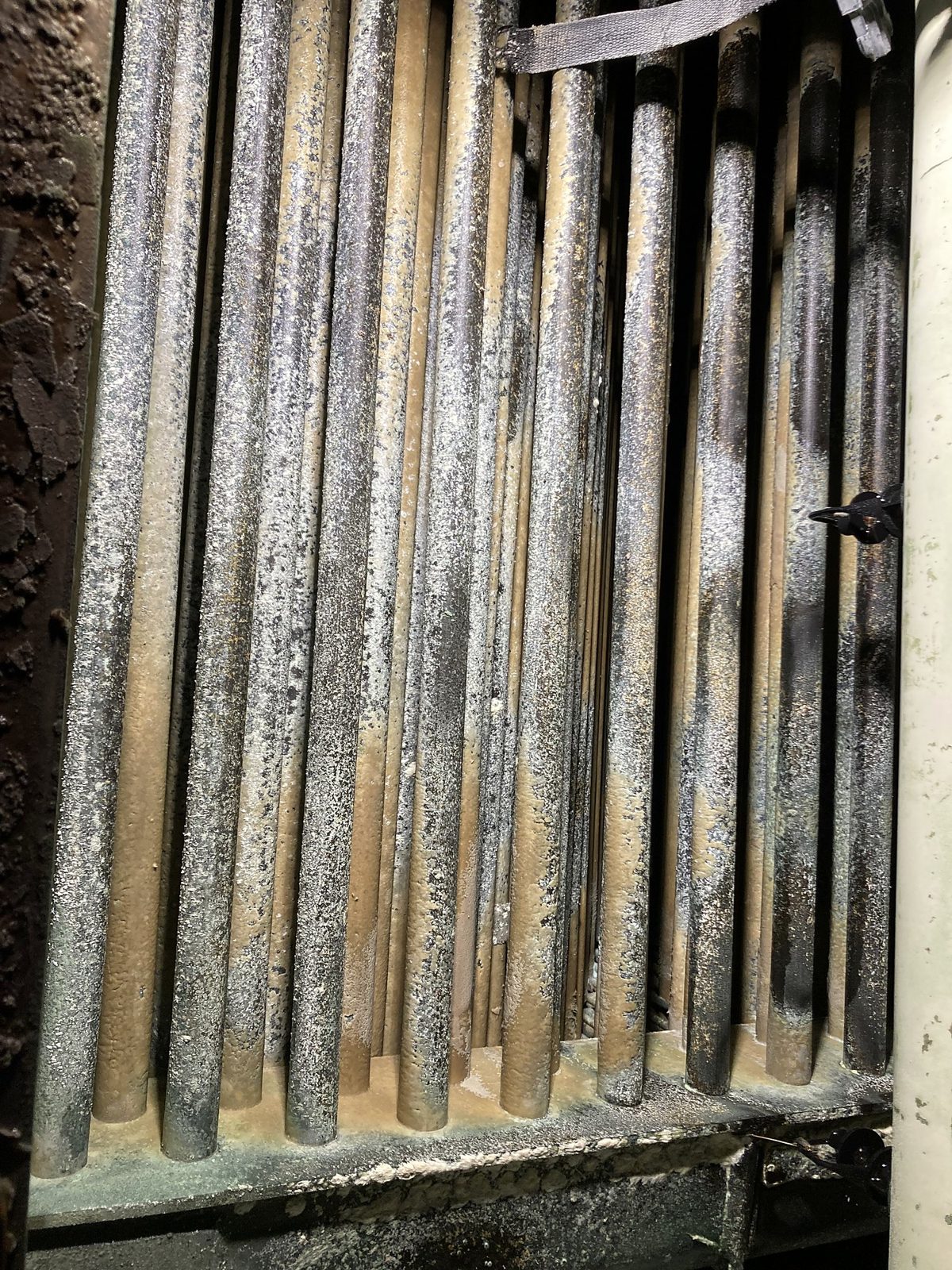
Fuel: scale on boiler surfaces insulates them, so you burn more gas for the same steam.
Blowdown: boilers blowing down too much waste water, heat and chemicals.
Water and sewer: towers running at low cycles send clean water down the drain.
Wastewater: solids and fats in discharge can bring sewer surcharges or permit trouble.
Downtime: a failed boiler or condensate line stops production.
Where food plants lose money on water
- Boilers making steam for cooking, sterilizing, pasteurizing and cleaning, often with no one verifying the chemistry
- Cooling towers and evaporative condensers on refrigeration and process cooling
- Washdown and CIP water that adds to sewer volume and surcharges
- Process water that could be reused but goes down the drain instead
- Softeners that drift and send hardness to the boilers
Proof: one plant's assessment
A San Diego County food processor had four boilers (450 HP total) with no regular service and a 100-ton cooling tower running city water straight through. Our assessment estimated:
| Where the savings come from | Estimated per year |
|---|---|
| Tower cycle control | $31,500 |
| Boiler deposits and scale | $20,900 |
| Boiler and condensate damage avoided | $16,200 |
| Reusing treated process wastewater in the tower | $11,200 |
| Boiler blowdown control | $10,700 |
| Expected total | About $90,500 (range $74,000–$107,000) |
Working estimate from a 2026 Hydrovida assessment, not a guarantee. The customer isn't named. We confirm the figure with your own bills before you commit.
- 120+
- Facilities served
- $36K
- Average yearly savings per customer
- 30%
- Average water reduction
- 0
- Customers lost to performance
Averages across Hydrovida customers.
How Hydrovida helps
Boiler water treatment with BTec chemistry: oxygen control, internal treatment and condensate protection
Cooling tower treatment at the highest safe cycles
Water reuse finding process water that can be treated and reused as tower makeup
Wastewater and discharge treatment with Perfloc coagulants and flocculants
Monthly testing of every boiler, with residuals verified, not assumed
The chemistry behind it
- BTec OS oxygen scavenger and BTec SL condensate amine protect boilers and steam lines. Food-grade options are available for steam that contacts food.
- BTec P, Green or L500 internal treatment keeps boiler surfaces free of scale and sludge. BTec Green is phosphate-free and biodegradable.
- CTec inhibitors and rotating biocides keep towers and evaporative condensers clean.
- Perfloc coagulants and flocculants clarify wastewater and help meet discharge limits.
Ready for your food safety audit
After every service visit, you get a written report: test results, adjustments and corrective actions. Your chemical list, data sheets and service records are kept in one place for SQF, BRC and customer audits.
FAQ
Is your chemistry safe around food production?
We offer NSF/ANSI/CAN 60 certified chemistry options, and we match products to each system's requirements.
Can you help us reuse water?
Often, yes. We test candidate streams like evaporator condensate and tell you what treatment they'd need.
Do you have food-grade boiler chemistry?
Yes. Food-grade options are available for steam that contacts food. We match the product to your application.
Can you help lower our sewer surcharges?
Often, yes. Better solids and organics removal, and reusing water where possible, lowers the numbers your surcharge is based on.
Get your plant's savings number
Talk to a Hydrovida engineer about your system — no obligation, no cost.
or call (866) 808-3315.