Cooling tower cleaning that you can see
Sludge in the basin, plugged nozzles and slime on the fill all cost you cooling capacity and raise your Legionella risk. Hydrovida cleans and disinfects the whole tower, then shows you before-and-after photos of every section.
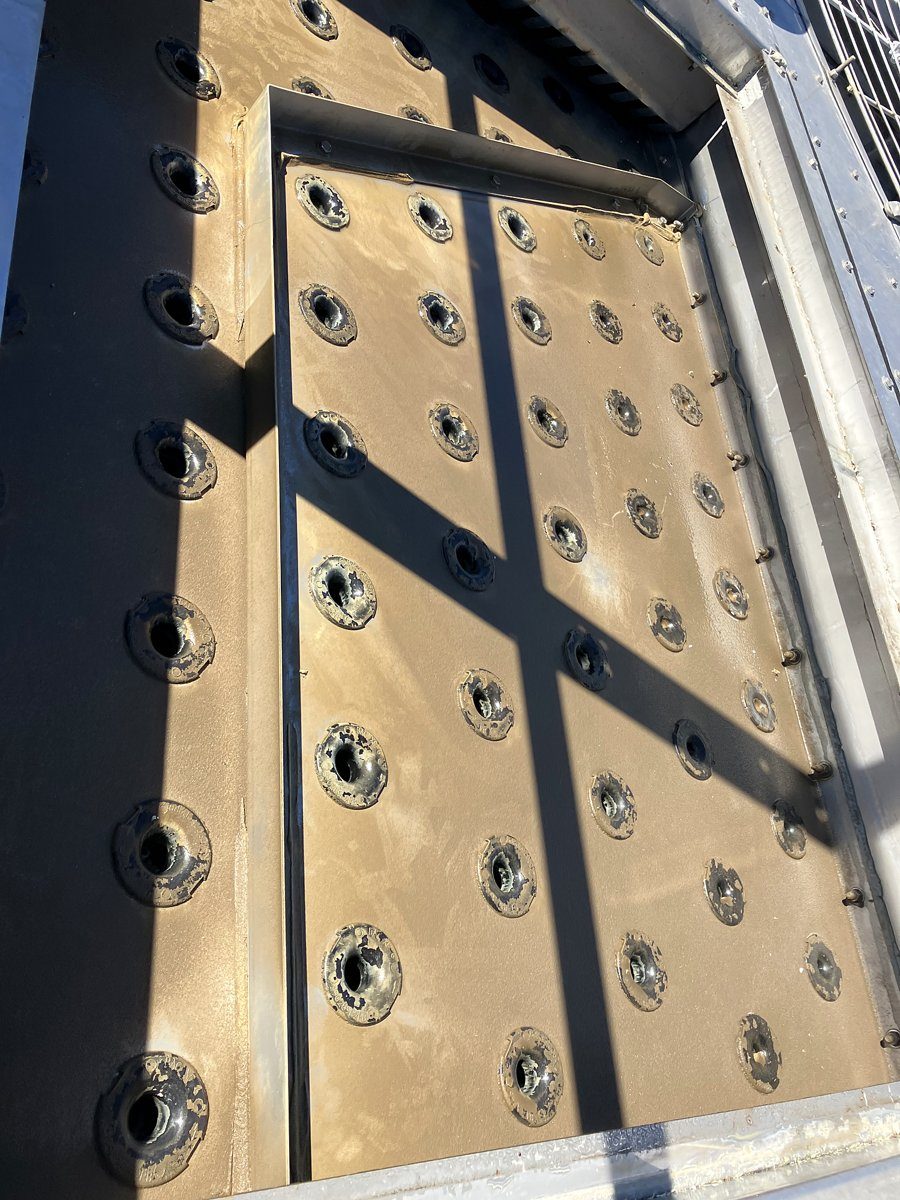
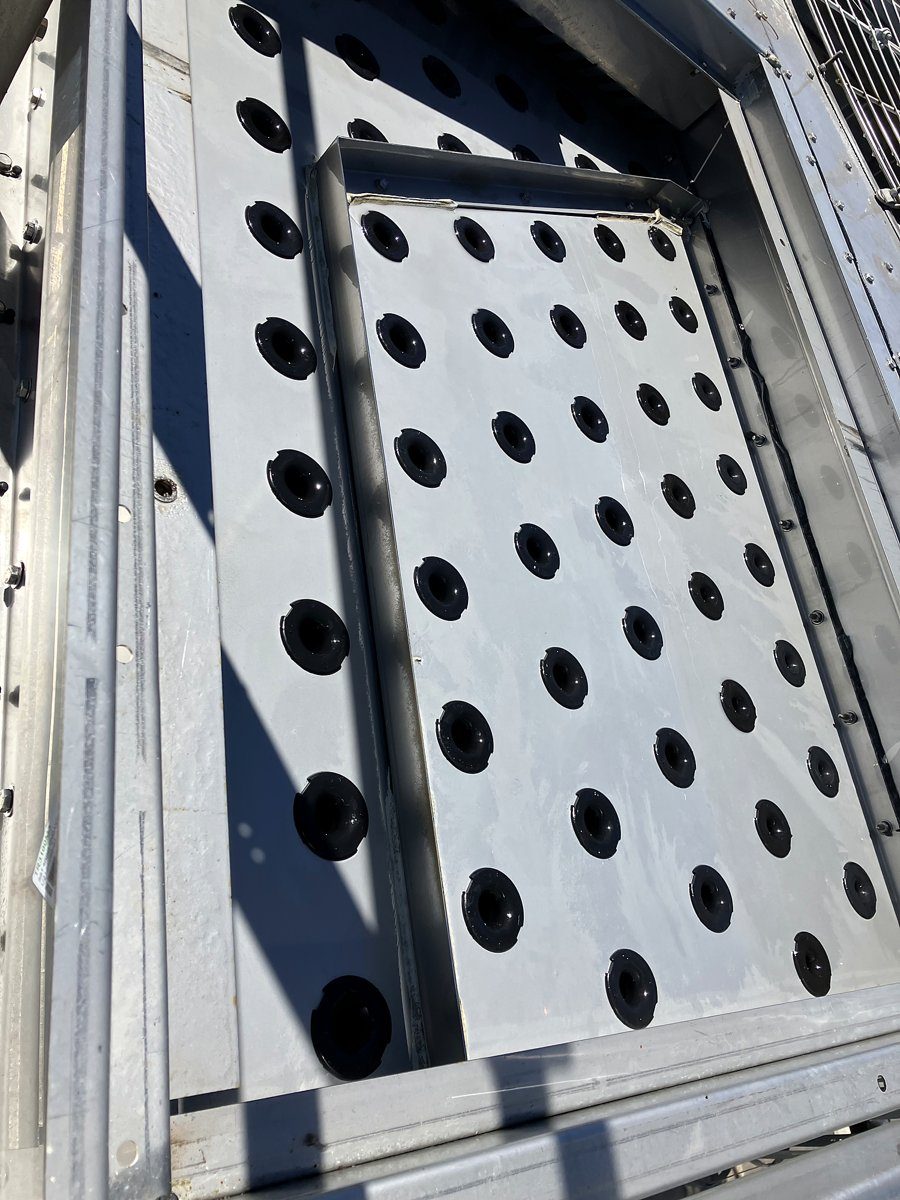 BeforeAfter
Signs your tower needs cleaning
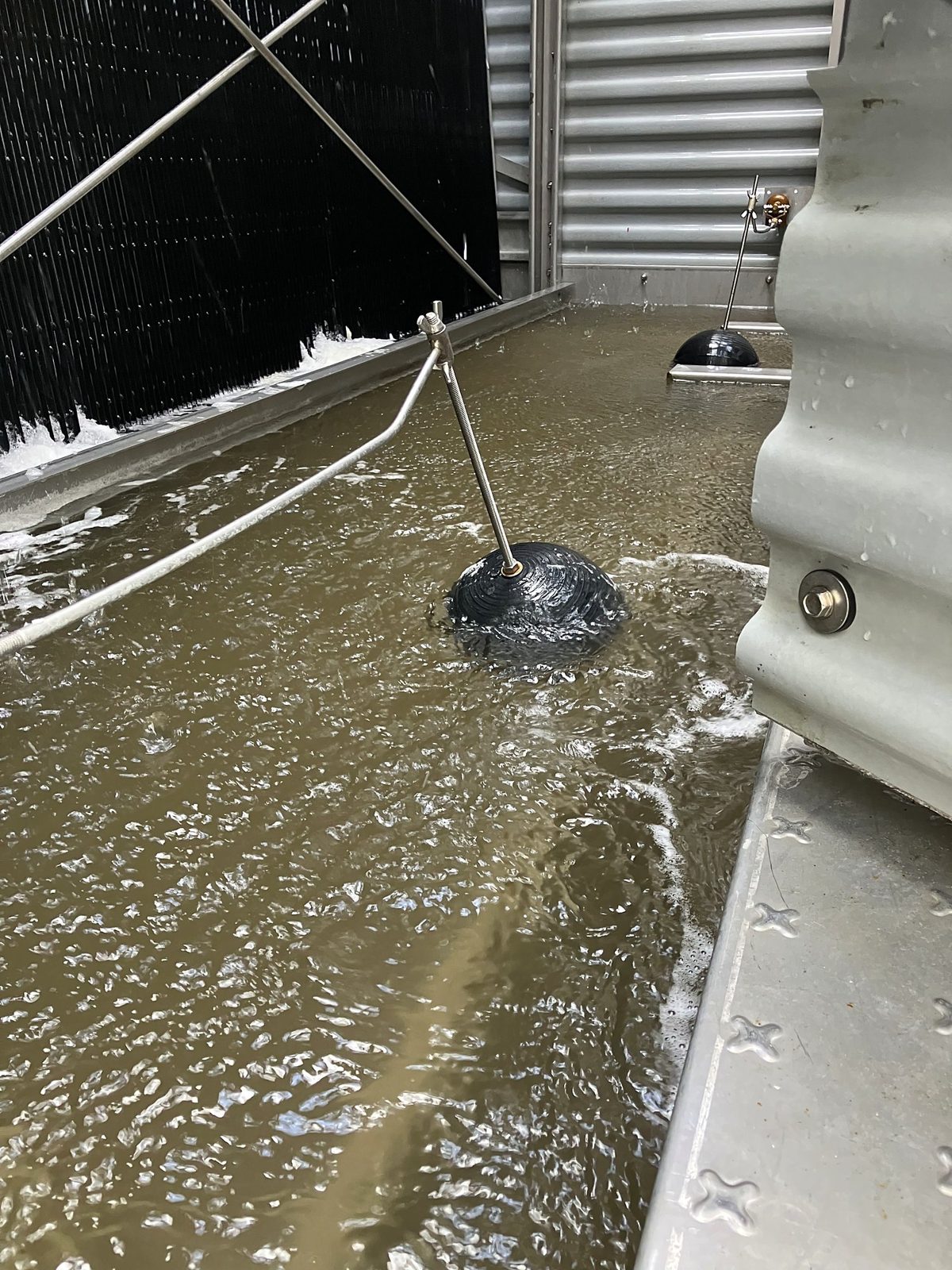
- Dry spots on the fill, or water spilling over the distribution basin
- Brown or green water, foam, or a musty smell
- Sludge, scale chunks or algae in the basin
- Chiller head pressure creeping up in warm weather
- A positive or rising bacteria test
What's at stake
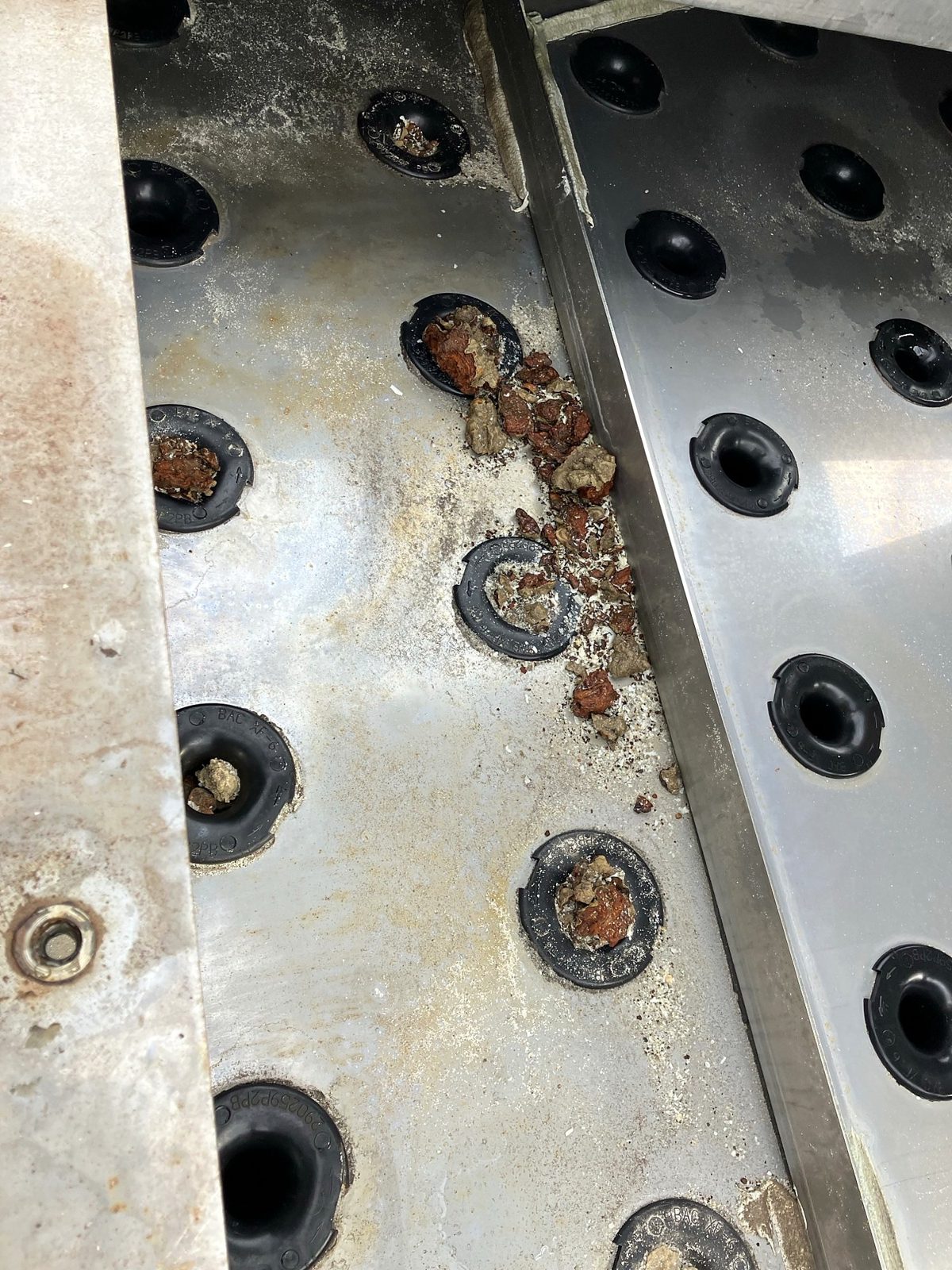
Capacity: plugged nozzles leave sections of fill dry. Your tower cools less, so your chiller works harder.
Legionella: sludge and biofilm are where Legionella lives. Biocide can't reach bacteria buried in deposits.
Equipment life: debris under scale and sludge corrodes basins and supports from the inside.
Cooling tower sludge removal
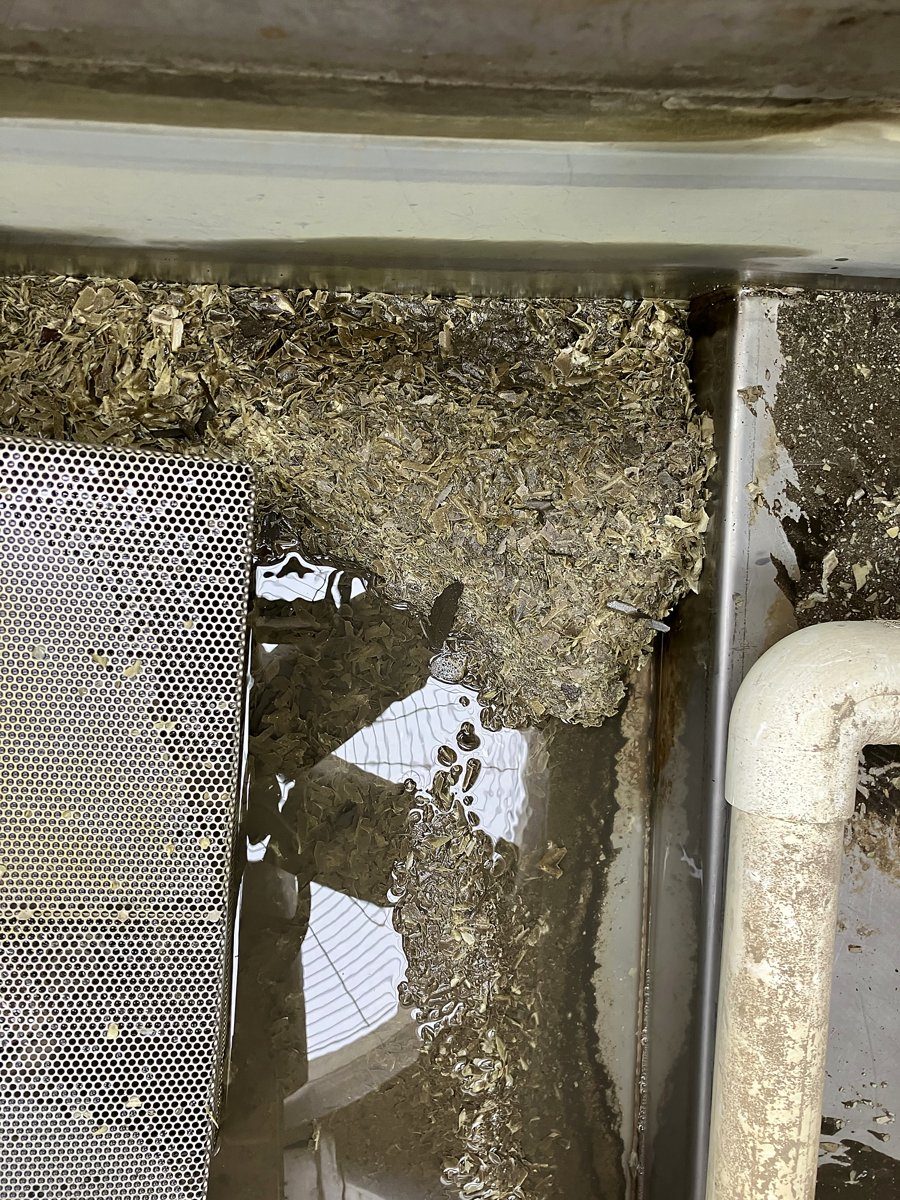
Cooling tower sludge is the soft, settled material that collects in the basin and sump: dirt blown in with the air, rust, scale particles, and biological growth. It is not the same thing as hard scale on the fill or the tubes, and it will not go away just because you add more chemical.
Sludge matters for two reasons. First, public-health guidance treats sediment, sludge and biofilm as places Legionella can live, where biocide in the bulk water may not reach. Second, sludge clogs strainers and nozzles, and debris trapped under deposits can attack basin steel from the inside.
If you can scoop a layer of material from the basin, or the water is brown, musty, or leaving the fill dry in spots, the sludge needs to be physically removed. That is a shutdown cleaning: disinfect first so bacteria are knocked down before the deposits are disturbed, drain the basin, haul the sludge, clean the nozzles and accessible fill, then disinfect and restart with treatment set correctly. How often depends on how fast the basin gets dirty again. A full cleaning at least once a year is the CDC's minimum; many seasonal or dusty sites need it twice a year, which is also what OSHA recommends, and matches how we describe dusty or high-load towers on this page.
Chemicals and blowdown help slow how fast sludge returns. They do not replace removal once a layer has already formed.
Our cleaning process
- 01
Pre-clean disinfection to knock down bacteria before anyone disturbs the deposits.
- 02
Drain, remove and haul sludge and debris from the basin and sump.
- 03
Clean the distribution basins and clear every nozzle.
- 04
Clean the fill, louvers and drift eliminators, or flag fill that should be replaced.
- 05
Inspect the structure, fasteners and casing and photograph anything that needs repair.
- 06
Refill, disinfect and restart with treatment dialed in.
- 07
Report with before-and-after photos, findings and recommended next steps.
What's in your cleaning report
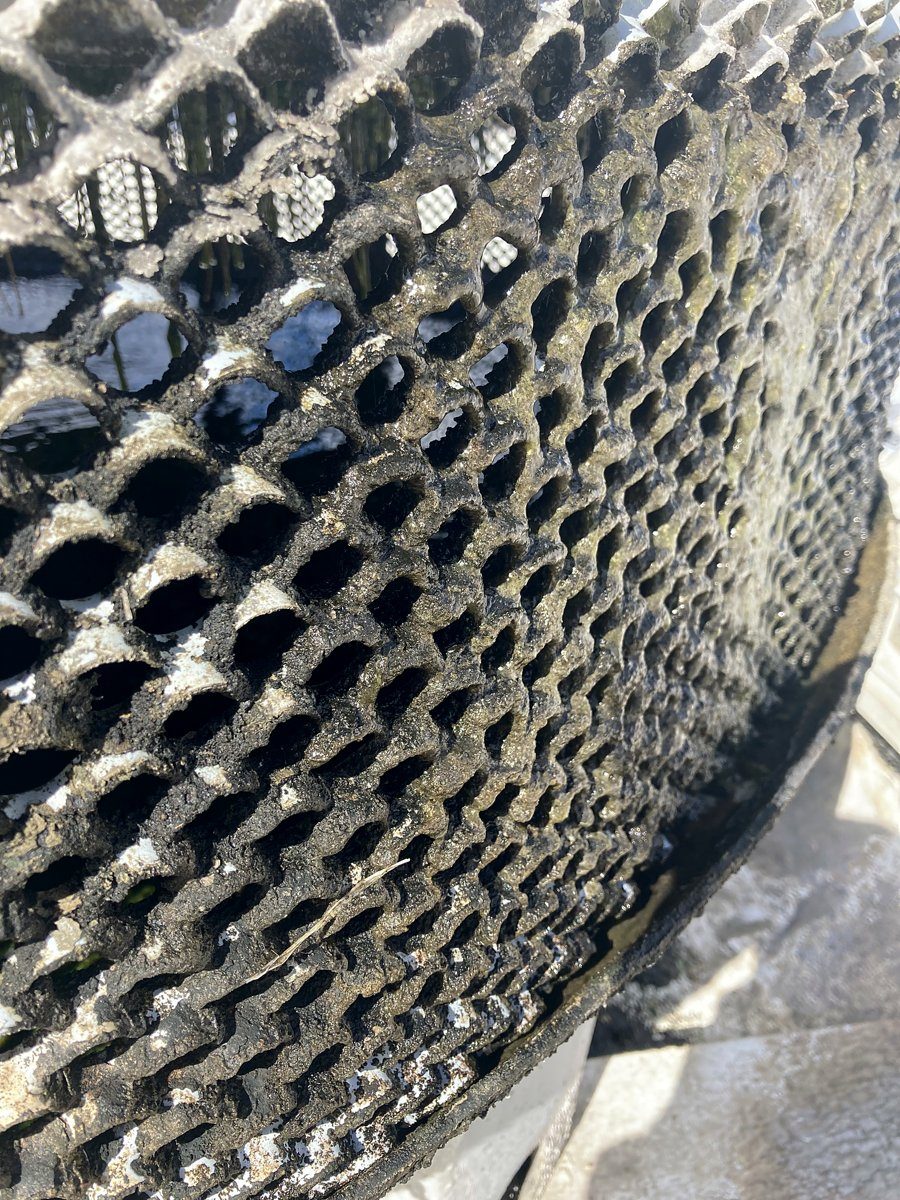
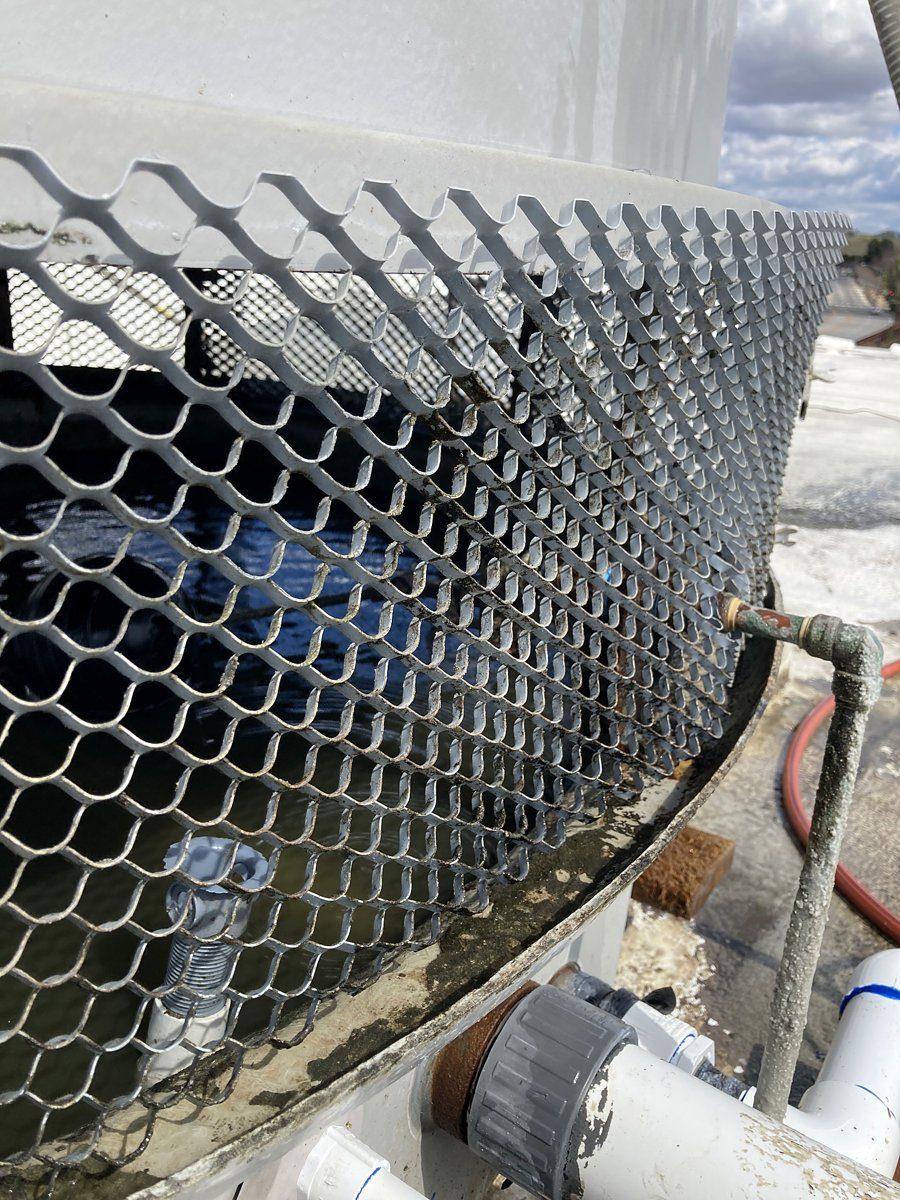
- Before-and-after photos of the basin, distribution deck, fill, louvers and drift eliminators
- What we found: sludge depth, scale, biofilm, plugged nozzles and damaged components
- Repairs we recommend, with photos
- Water treatment changes to keep the tower clean longer
Before and after
 BeforeAfter
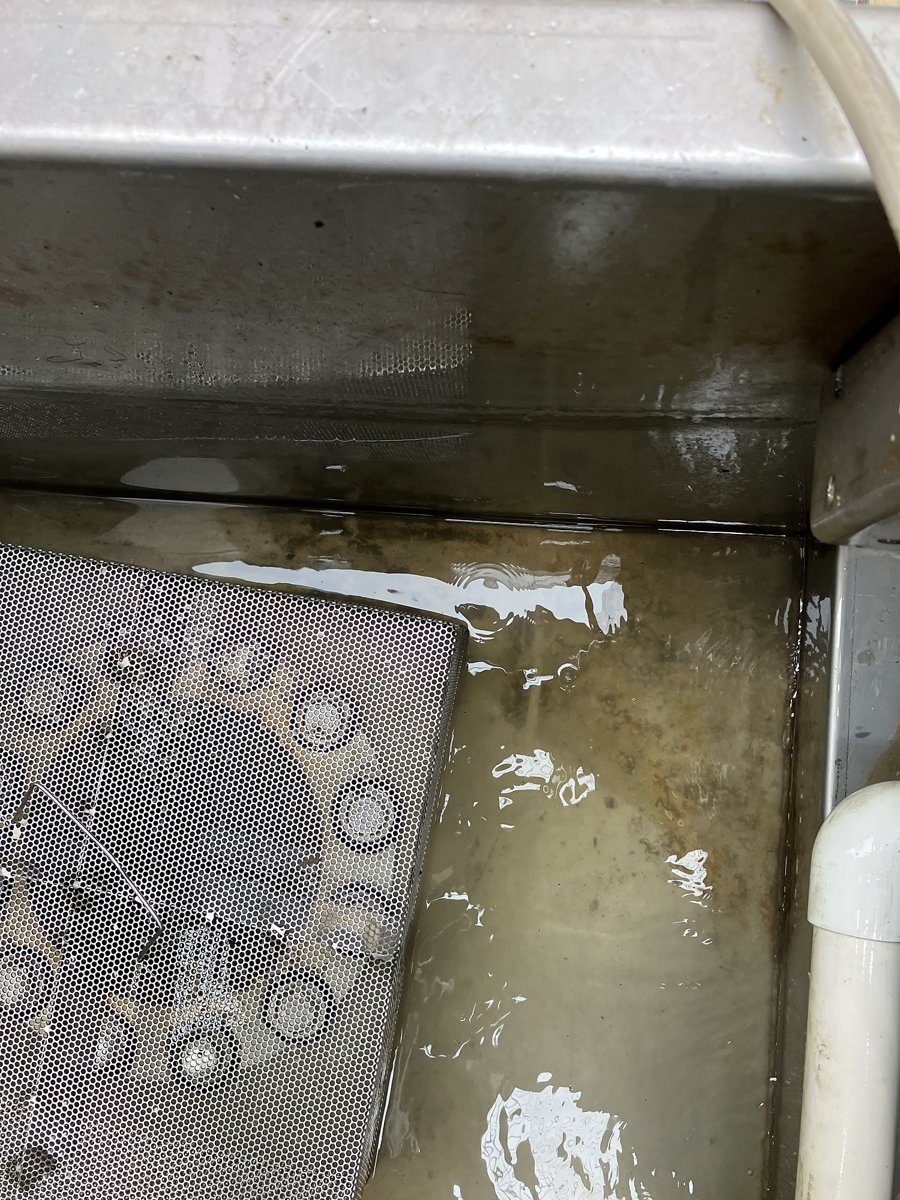 BeforeAfter
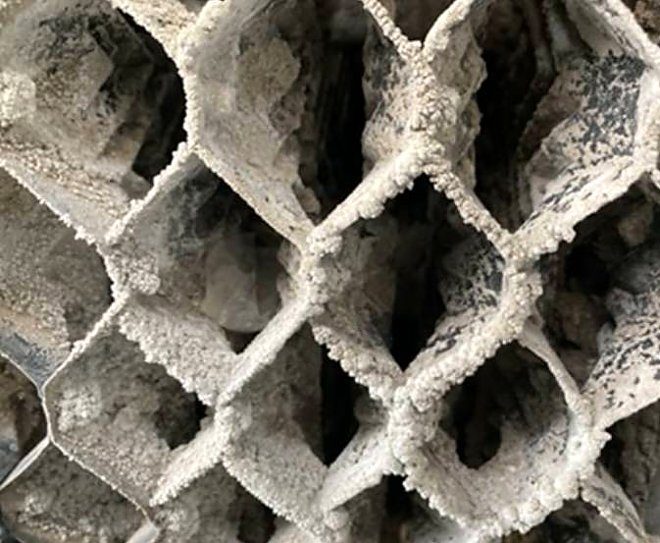
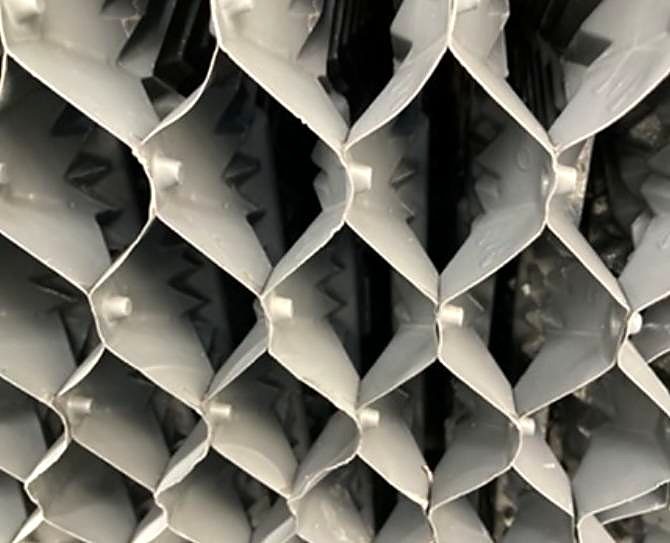 BeforeAfter
How often should a tower be cleaned?
Most towers need a full cleaning and disinfection at least once a year, and twice a year in dusty or high-load areas. Your water treatment program decides how fast it gets dirty again.
Between those cleanings, see our daily-to-annual cooling tower maintenance checklist.
Cleaning resets the tower. Treatment keeps it clean.
A tower that scales or slimes up fast after a cleaning has a treatment problem, not a cleaning problem. We pair every cleaning with a review of your water treatment, so the tower stays clean between cleanings. CTec L2, our biodegradable descaler, removes carbonate scale and rust from tower surfaces during the clean.
When cleaning isn't enough
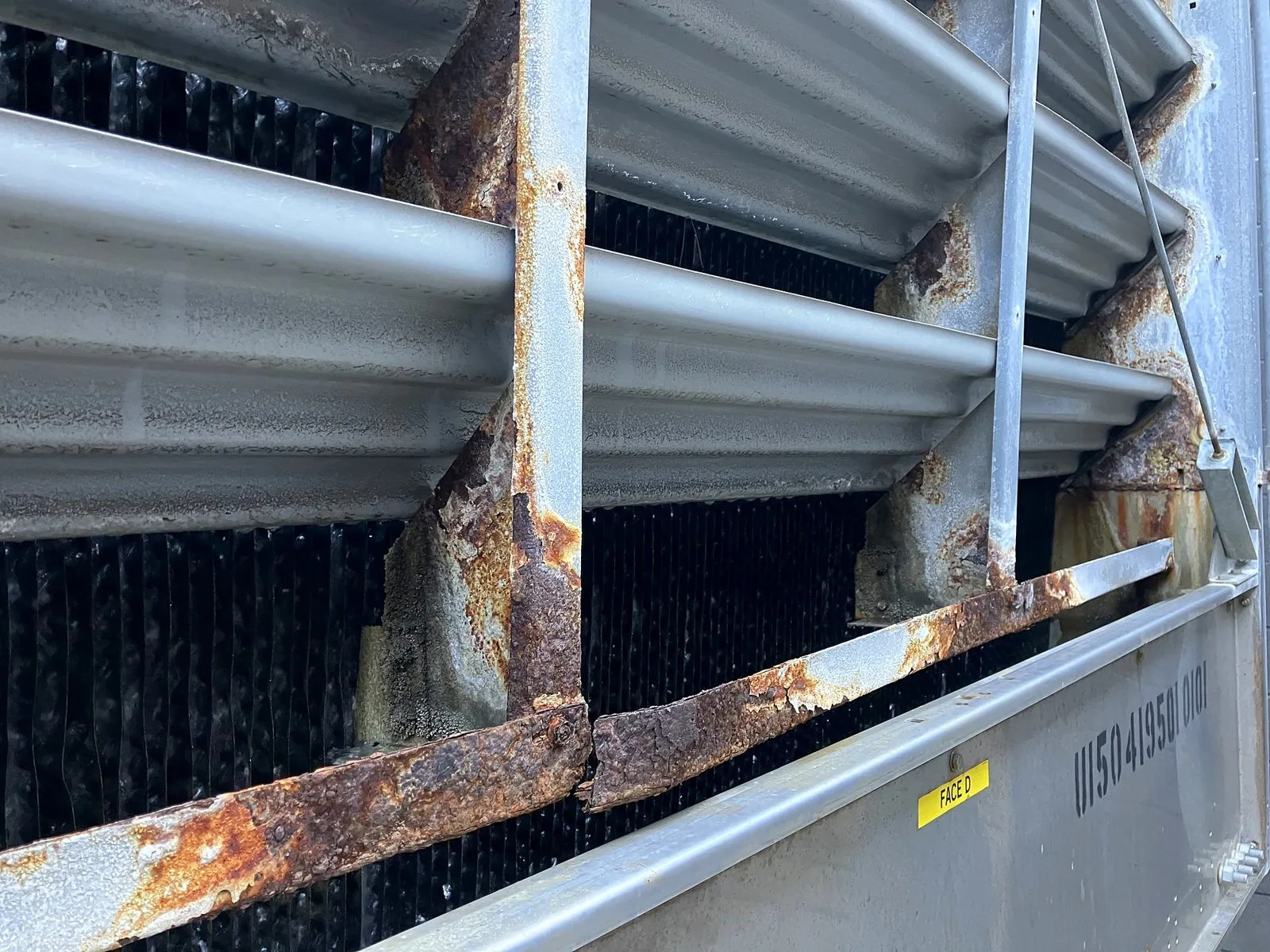
If fill has collapsed, nozzles are cracked or the structure is rusting, cleaning won't bring the tower back. We'll show you what we found and quote a repair or refurbishment, often for far less than a new tower.
Where we clean towers
San Diego County, Los Angeles and Orange County, the Inland Empire, Imperial Valley, the Central Valley, the Bay Area and Sacramento, plus Yuma, Reno and Northern Mexico.
FAQ
Do we have to shut the tower down?
Yes, for most of the cleaning. We schedule it around your load.
Is cleaning enough on its own?
No. Cleaning resets the tower, and the treatment program keeps it clean. We do both.
Can you clean towers you don't treat?
Yes. Many customers start with a cleaning and then compare our program to their current one.
Is cleaning included in a service program?
Cleaning and disinfection are quoted separately and only done with your approval, so you always know the cost first.
Does cleaning help with Legionella?
Yes. Removing sludge and biofilm takes away where Legionella lives, and pre-clean and post-clean disinfection reduce exposure during and after the work. It works best as part of a water management plan.
What is cooling tower sludge?
It is the soft material that settles in the basin and sump — dirt, rust, scale particles and biological growth. It is different from hard scale on the fill or chiller tubes. If you can scoop a layer off the basin floor, that is sludge, and it needs to be physically removed.
Can water treatment chemicals remove sludge without a cleaning?
Not once a layer has already formed. Treatment, blowdown and, in some systems, filtration help keep new solids from building up as quickly. They do not replace a shutdown cleaning that hauls the sludge out of the basin. Biocide in the circulating water also may not reach bacteria living in those deposits.
How often should cooling tower sludge be removed?
Whenever a noticeable layer has formed, and as part of a scheduled full cleaning. The CDC recommends taking a tower out of service for cleaning and disinfection at least once a year, and more often depending on how the tower runs. OSHA recommends at least twice a year, especially around seasonal start-up and shutdown, and more often if the tower is heavily fouled. On this page we describe a full cleaning at least once a year, and twice a year in dusty or high-load areas.
See what's inside your tower
We'll inspect it, take photos and give you a cleaning quote at no cost.
or call (866) 808-3315.