
Cycles of Concentration: The Number That Decides Your Cooling Tower Water Bill
By Hydrovida ·
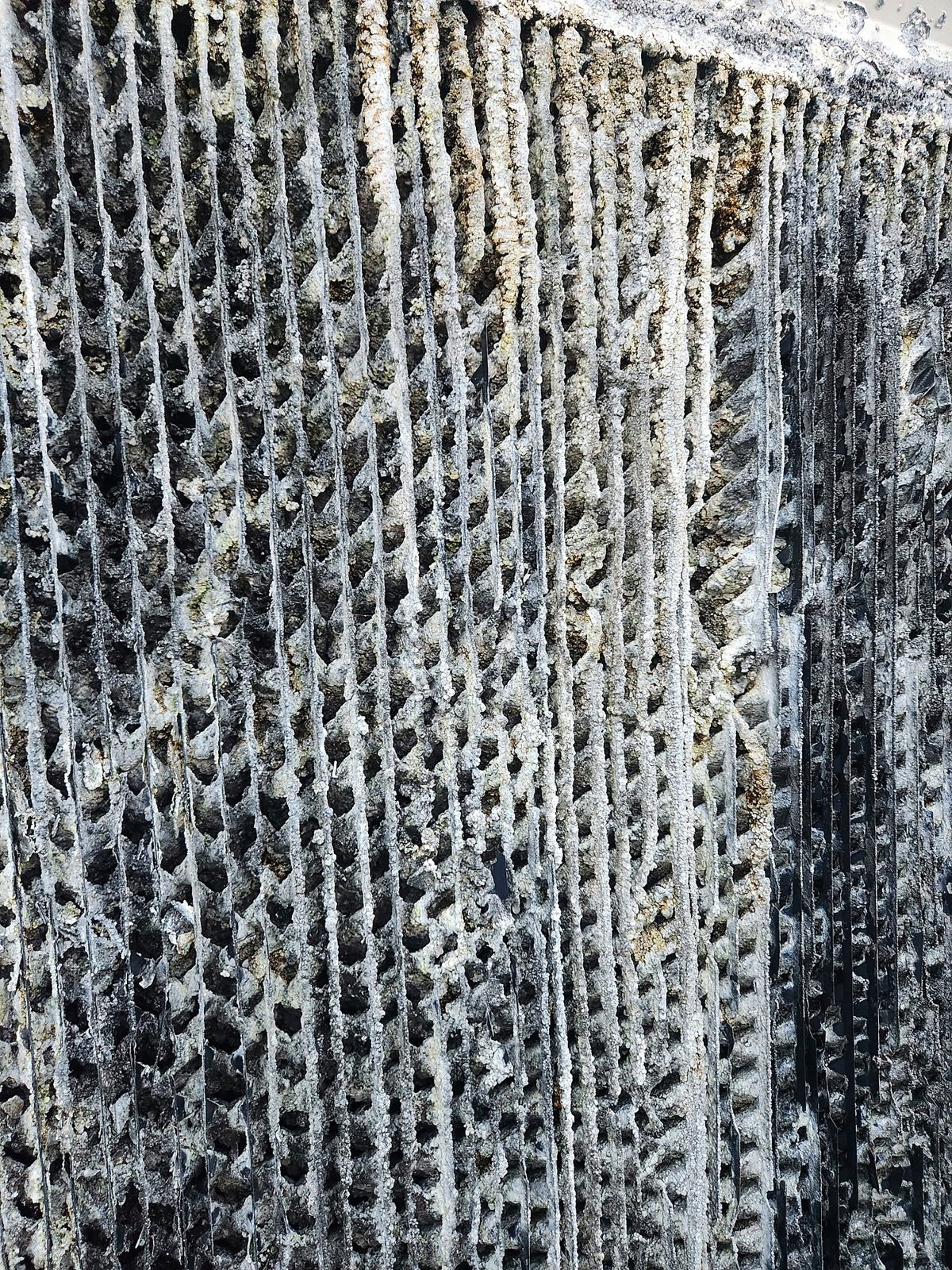
If your facility has a cooling tower, it's probably your biggest water user. And the amount of water it buys every year comes down to one number most facility managers have never been told: cycles of concentration.
Where your cooling tower's water goes
A cooling tower cools by evaporating water. Evaporation is the whole point, and you can't avoid it. But when water evaporates, the minerals in it stay behind. If nothing else happened, the water in the tower would get saltier and harder until scale coated everything.
So towers do two things:
- They bleed off some concentrated water to the drain. This is called blowdown.
- They add fresh water to replace what evaporated and what was bled off. This is called makeup.
Evaporation is set by your cooling load. Blowdown is set by your water treatment program. That's where the money is.
What "cycles" means
Cycles of concentration compares the water in your tower to the water coming in. If your tower water has three times the minerals of your city water, you're running 3 cycles. If it has six times, you're running 6 cycles.
Higher cycles mean the tower reuses its water more times before bleeding it off. Fewer gallons go down the drain, and fewer gallons need to be bought to replace them.
The relationship is simple:
- Blowdown = Evaporation ÷ (Cycles − 1)
- Makeup = Evaporation + Blowdown
A worked example
Take a tower that evaporates 4 million gallons a year.
At 3 cycles:
- Blowdown: 4,000,000 ÷ 2 = 2,000,000 gallons
- Makeup: 6,000,000 gallons
At 6 cycles:
- Blowdown: 4,000,000 ÷ 5 = 800,000 gallons
- Makeup: 4,800,000 gallons
Same tower, same cooling load. Going from 3 to 6 cycles cuts blowdown by 60% and saves 1.2 million gallons a year. Put another way, the tower at 3 cycles is buying 25% more water than it needs to.
At an example combined water and sewer cost of 1.5 cents a gallon, that's about $18,000 a year from one tower. Your rates and your tower will be different, but in most of California, water and sewer costs only go one direction.
Why most towers run low
If higher cycles save that much, why doesn't every tower run them? Because higher cycles also mean more concentrated water, and more concentrated water scales and corrodes faster. Running low cycles is the "safe" setting. It hides weak treatment by throwing water at the problem.
Common reasons a tower is stuck at low cycles:
- A generic inhibitor that isn't matched to the local water
- A controller that's out of calibration, so the blowdown setpoint is wrong
- A stuck or leaking blowdown valve
- Nobody testing often enough to catch problems before they become scale
- Hard, mineral-heavy water (common across Southern California and the Imperial Valley) that limits how far cycles can go without the right chemistry
How to run more cycles safely
Running more cycles isn't about turning a dial. It takes:
- A full water analysis, so you know exactly what's in your makeup water and where the scaling limits are.
- Chemistry matched to that water. The right scale and corrosion inhibitors let the water hold more minerals in solution without depositing them.
- A calibrated controller that measures conductivity and bleeds at the right setpoint, every time.
- Routine testing that confirms the program is working: inhibitor levels, corrosion rates and biological counts.
- A written report, so you can see cycles, water use and savings over time.
One more thing to check: evaporation credits
Many water and sewer agencies charge sewer fees based on the water you buy. But evaporated water never reaches the sewer. Some agencies offer a credit if you meter your makeup and blowdown separately. If you don't have one, it's worth a call to your agency.
What to ask your current provider
- What cycles are we running today?
- What's limiting us from running more?
- How much water would we save at higher cycles?
- When was our controller last calibrated?
If they can't answer, that's the answer.