When something's wrong with your water, our lab finds out what.
A white crust nobody can identify. A membrane that fouls overnight. A deposit that keeps coming back. Guessing at the cause means guessing at the fix. Our lab runs thousands of analyses a year, for our own programs and for outside clients, to give you a definitive answer and a clear next step.
What we can tell you
- What a deposit, scale or fouling layer is made of
- What's corroding your equipment, and why
- What an unknown compound in your water is
- Whether a chemical or material is what it's supposed to be
- What pretreatment and chemistry a water stream needs before reuse, discharge or RO
Our capabilities
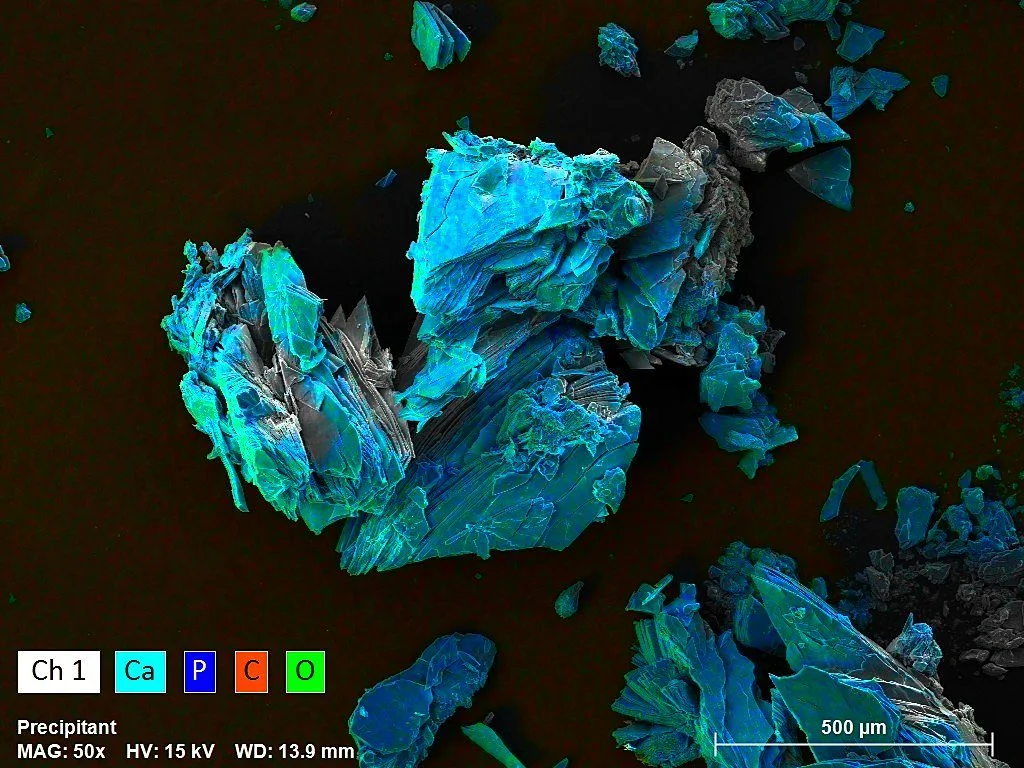
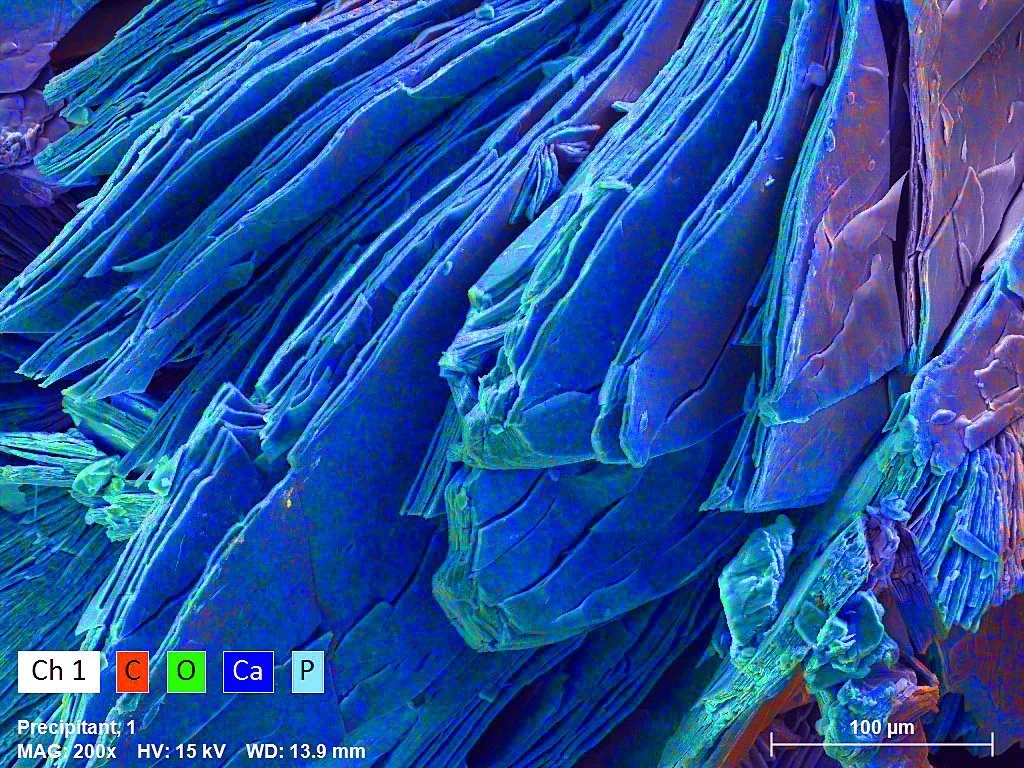
- SEM/EDS with elemental mapping. A scanning electron microscope shows the sample up close, and elemental mapping shows where each element sits across it. It's the fastest way to understand a fouling layer or a complex scale.
- ATR-IR spectroscopy. Infrared spectroscopy fingerprints the chemical bonds in a sample, so we can identify organics and polymers and confirm a material against a known standard.
- GC-MS. Gas chromatography-mass spectrometry identifies volatile and semi-volatile compounds.
- Wet chemistry. Hardness, alkalinity, silica, metals and the other routine tests behind every treatment program.
Unknown sample analysis
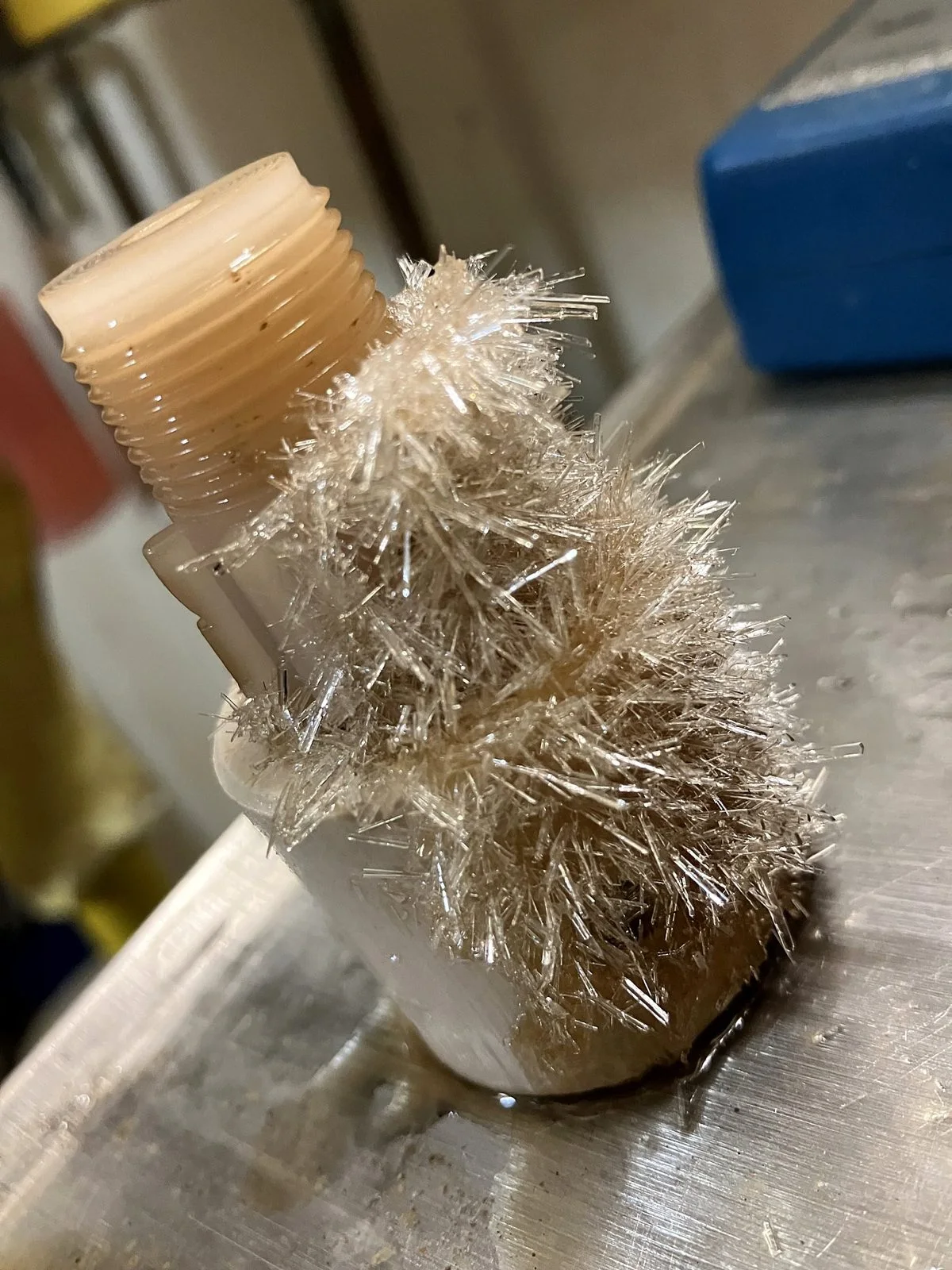
Water dissolves almost everything it touches, so treatment systems turn up an endless variety of unknown compounds. Our lab identifies them, so the right chemistry can be applied before a compound forces a costly shutdown or equipment replacement.
Filtration and coagulation studies
For water headed to reuse or discharge, we bench-test filtration, coagulant dosing and sludge dewatering to find the pretreatment an RO system needs and the chemistry that gives the best water quality.
What you get
- A written report with methods, spectra and images, our interpretation and recommended next steps
- Standard turnaround of 5–7 business days, with rush available
- Chain-of-custody documentation
Questions
Do you work with outside clients, or only Hydrovida customers?
Both. Our lab supports our own programs and outside clients looking for definitive answers.
How long does analysis take?
Standard turnaround is 5–7 business days. Rush service is available.
How do I send a sample?
Contact us for a chain-of-custody form and shipping instructions.
What kinds of samples can you analyze?
Water, deposits, scale, corrosion products, membrane surfaces, chemicals and unknown materials from water systems.
Related
Get a definitive answer.
Contact the lab for a chain-of-custody form and shipping instructions.