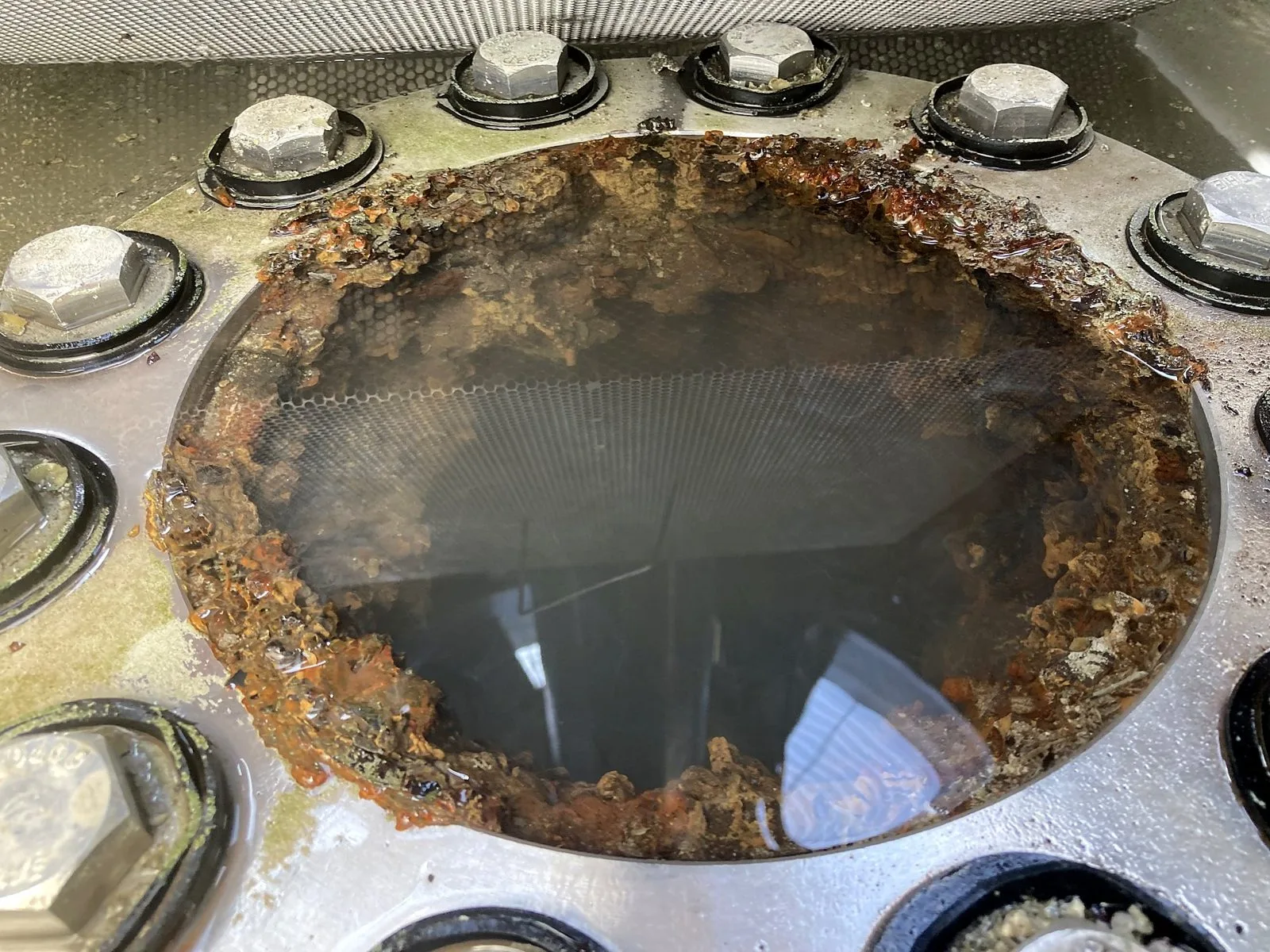
Rusty water and failing pumps? Your closed loop is corroding.
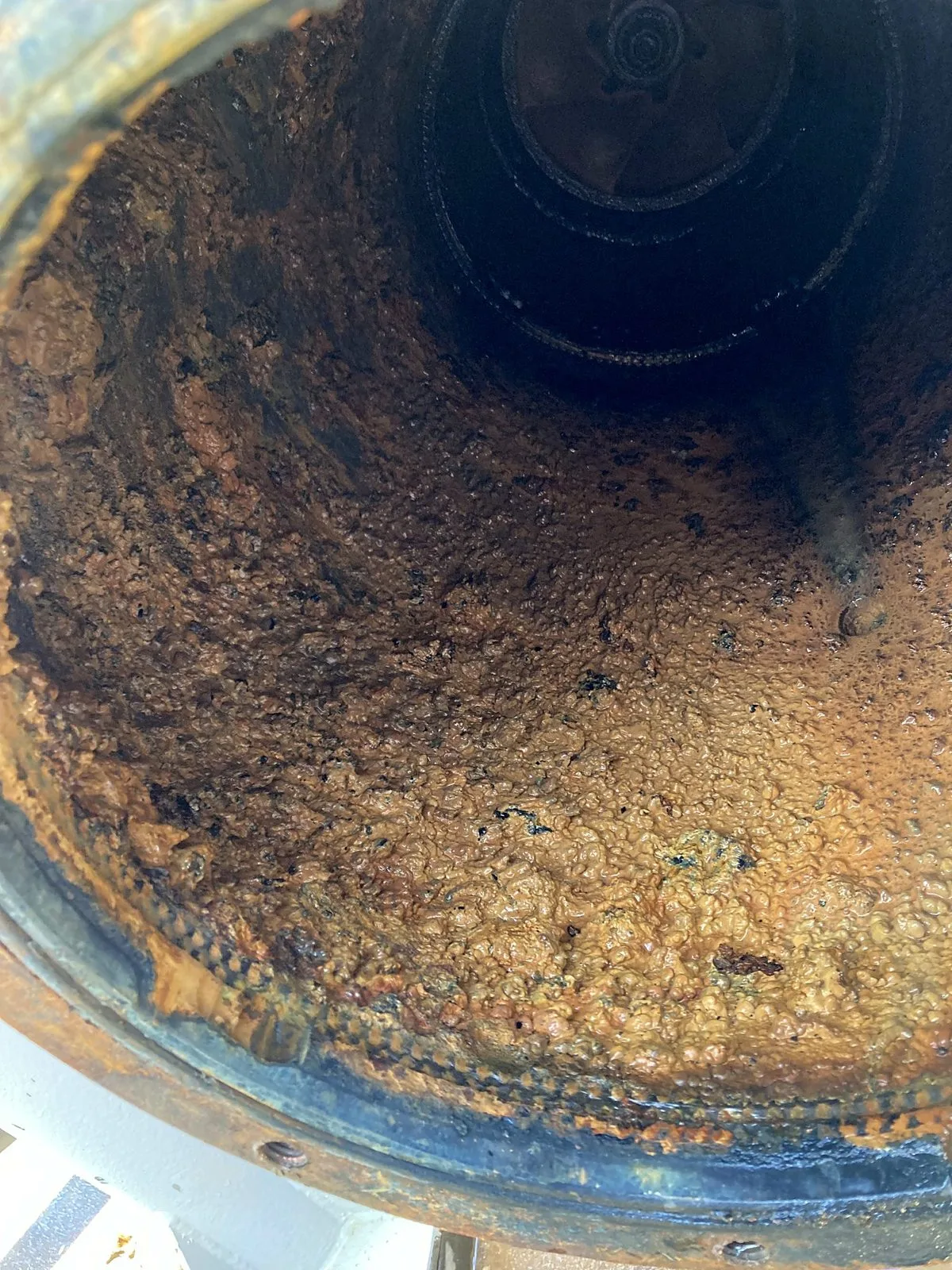
Closed loops are supposed to be low-maintenance. But leaks, makeup water and neglected chemistry let corrosion take hold quietly, inside pipes you can't see. By the time the water runs brown or a pump fails, the damage has been building for months. Hydrovida protects chilled water, hot water and process loops with LTec chemistry and real corrosion data.
Signs your loop is in trouble
- Brown, black or cloudy water when you drain a sample
- Pinhole leaks in piping or coils
- Pumps, seals and valves that keep failing
- Strainers that plug with rust and sludge
- Rising pressure drop across coils and heat exchangers
- A loop nobody has tested in a year or more
What corrosion in a closed loop costs you
Repairs. Pinhole leaks, failed pumps and seized valves add up, and leaks usually show up where they do the most damage.
Energy. Rust and sludge coat heat exchangers and coils, so chillers and boilers work harder to move the same heat.
Water damage. A leak in a ceiling, patient room or server room costs far more than the pipe.
Early replacement. Untreated loops can lose years of life in piping and equipment that's expensive to replace.
Why closed loops corrode
A closed loop should hold the same water for years. It only stays protected if the inhibitor stays in range. Here's what breaks that:
- 01
Makeup water. Every leak gets topped off with fresh water, which dilutes the inhibitor and brings in fresh oxygen.
- 02
Mixed metals. Steel, copper and other metals in one loop need an inhibitor package chosen for that mix.
- 03
Low-flow zones and dead legs, where sediment settles and bacteria grow.
- 04
Failed side-stream filters, which let rust and debris circulate.
- 05
No testing. Without regular residual checks, nobody knows the protection is gone.
How Hydrovida fixes it
- 01
We test the loop: inhibitor level, pH, conductivity, iron and copper, and bacteria.
- 02
We find the leak and the makeup. We meter makeup water, so a hidden leak shows up as a number, not a surprise.
- 03
We treat with LTec chemistry: molybdate, nitrite or organic-based inhibitor packages selected for your loop's metals and your local water.
- 04
We clean it up when needed, with cleaning and flushing for loops already full of rust and sludge.
- 05
We measure corrosion directly with corrosion coupon monitoring, so you see the actual corrosion rate in mils per year.
- 06
We verify every visit, with residual testing and a written report.
What you get
- An inhibitor program matched to your loop's metals and water
- Regular testing of inhibitor residuals, pH, iron and bacteria
- Makeup water tracking to catch leaks early
- Corrosion coupon data you can show your engineering team
- Side-stream filter checks
- A written report after every visit
Loops we treat
Chilled water loops, heating hot water loops, glycol systems, process cooling loops, data center cooling loops and closed-circuit fluid coolers.
Where we service closed loops
San Diego County, Los Angeles and Orange County, the Inland Empire, Imperial Valley, the Central Valley, the Bay Area and Sacramento, plus Yuma, Reno and Northern Mexico.
Questions
Why is the water in our chilled water loop brown?
Brown or black water usually means iron corrosion products from steel piping. It's a sign the inhibitor is low or gone, often because leaks keep adding fresh makeup water.
How often should a closed loop be tested?
At least quarterly for most loops, and monthly for large or critical systems or any loop with a history of leaks.
Can you treat glycol loops?
Yes. We test glycol concentration and inhibitor levels and recommend top-offs or replacement when the glycol breaks down.
Our loop is already full of rust. Is it too late?
Usually not. We can clean and flush the loop, then put an inhibitor program in place to keep it from coming back.
Related
Find out what's happening inside your loop.
A Hydrovida rep will test your loop water on-site and tell you whether it's protected. No cost, no obligation.