
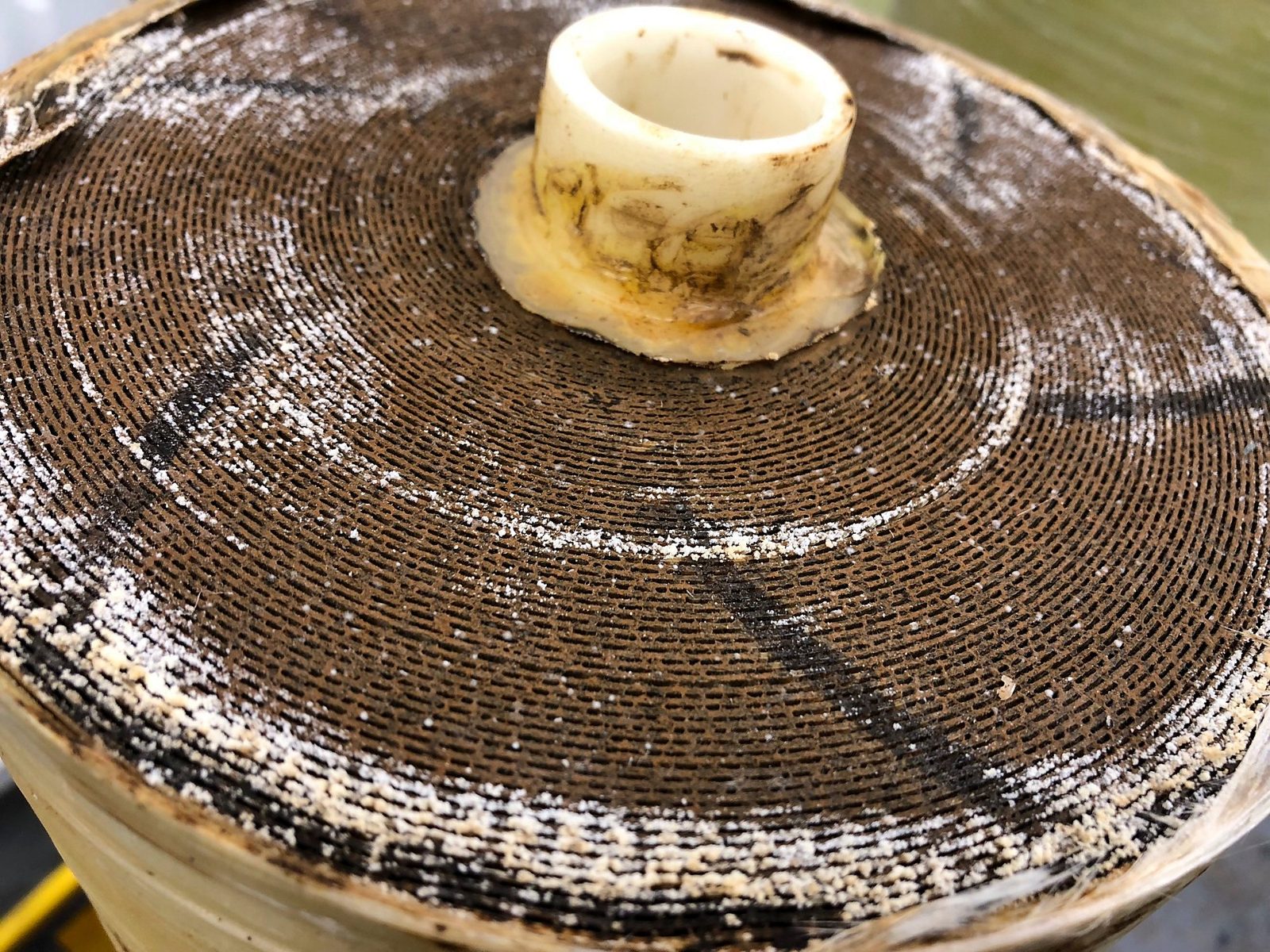
Find out exactly why your membranes failed.
When an RO or UF element loses flow or salt rejection, replacing it without knowing why just starts the clock on the next failure. A Hydrovida membrane autopsy takes the element apart, identifies what's on it and tells you what caused it, so you fix the real problem and your next set of membranes lasts.
When to order an autopsy
- Membranes failing well before their expected life
- Cleanings that no longer bring flow or rejection back
- A sudden drop in salt rejection
- Pressure climbing faster than it used to
- Before replacing a full set of elements, to make sure the new ones don't fail the same way
- A warranty claim or dispute that needs documented evidence
Why guessing costs more
A full set of replacement membranes is expensive. If the cause was scale, a new cleaner won't help. If it was chlorine damage, no cleaner will. If it was biofouling, more antiscalant just feeds the problem. An autopsy costs a fraction of a membrane set and tells you which fix actually works.
What we test
- 01
Wet test.
We test the full element's flow and salt rejection against its specification.
- 02
Inspection.
We examine the exterior for cracks and operational damage, then the glue lines and internals.
- 03
Dissection.
We cut the element open and harvest flat-sheet samples for cell testing and analysis.
- 04
Foulant analysis.
SEM/EDS, elemental mapping and ATR-IR identify exactly what's on the membrane surface.
- 05
Damage and cleaning tests.
We test for oxidation, abrasion and mechanical failure, and bench-test candidate cleaners before you clean on site.
Inside an autopsy
What you get back
A written report that explains:
- The failure mode: scale, biological fouling, oxidation (chlorine) damage, colloidal fouling or mechanical failure
- The likely cause in pretreatment or operation
- Photos and electron microscope images of what we found
- The cleaner and cleaning procedure that will work, tested on your membrane
- Specific changes to your antiscalant, pretreatment or operating program
When a fix calls for new chemistry, we can match it with a Solutec antiscalant or a Synetec cleaner.
What we find
Common findings include calcium carbonate and calcium phosphate scale, silica, iron and manganese fouling, biofilm, colloidal silt and clay, and oxidation damage from chlorine reaching the membrane. Seeing the foulant under an electron microscope, with its elements mapped, removes the guesswork.
Real findings
In one autopsy, a customer's membranes kept fouling after every cleaning. Our lab traced the problem to the cleaning procedure itself, and corrected it.
How to send an element
- 01Contact us for a chain-of-custody form and shipping instructions.
- 02Keep the element wet and bagged, and ship it as instructed.
- 03Include your operating data if you have it: pressures, flows, conductivity and cleaning history.
- 04We'll confirm when it arrives and keep you updated.
Questions
What is a membrane autopsy?
A lab teardown of a failed RO or UF element to identify what fouled or damaged it, and why.
Can you tell if chlorine damaged our membranes?
Yes. Damage testing checks for oxidation, the permanent damage caused when chlorine reaches the membrane.
Do you autopsy membranes from any manufacturer?
Yes. We analyze RO and UF elements regardless of brand or who supplied them.
Can the autopsy tell us which cleaner to use?
Yes. We bench-test candidate cleaners on samples of your membrane before you run a cleaning on site.
Related
Stop replacing membranes without knowing why.
Contact the lab for a chain-of-custody form and shipping instructions.