High-Cycle Cooling Tower Programs: The Hidden Cost of Softened Makeup Water
By Hydrovida ·
Some water treatment programs promise to cut your cooling tower water use dramatically by softening the makeup water and running the tower at very high cycles. Some vendors call these high-cycle or "zero blowdown" programs. On paper, the water savings look great.
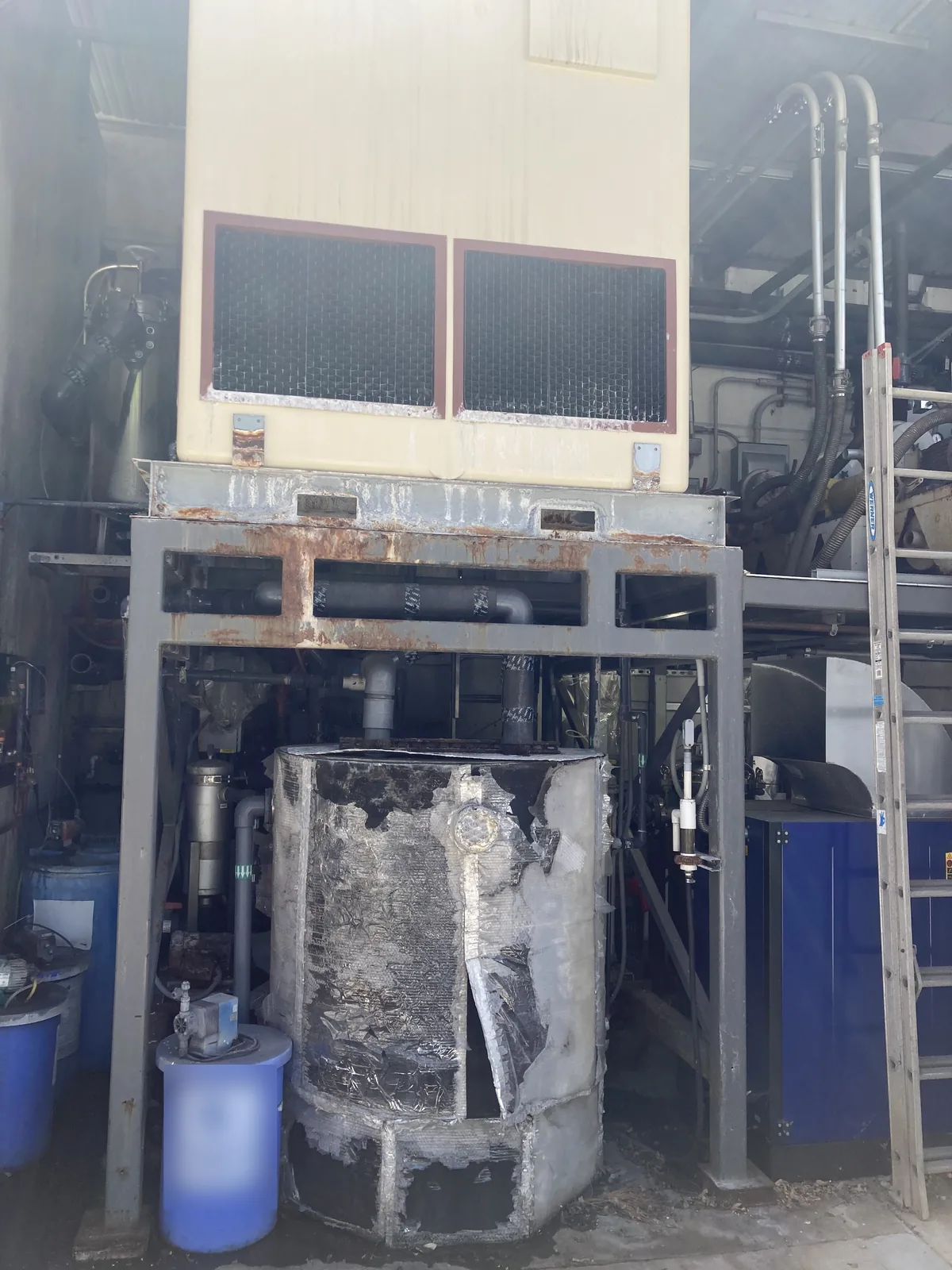
In practice, the savings come with risk. As our CEO puts it, a high-cycle program is a great idea in theory. But we've seen towers on these programs suffer significant premature failure because the water destroyed their interior components. A new tower costs far more than the water those programs save.
Here's what's going on, and how to save water without putting your equipment at risk.
First, a quick refresher on cycles
A cooling tower cools by evaporating water. The minerals in that water stay behind, so the tower bleeds off some concentrated water (called blowdown) and adds fresh water (called makeup).
Cycles of concentration compares the tower water to the makeup water. If the tower water has five times the dissolved minerals of your city water, you're running 5 cycles. Higher cycles mean less blowdown and less water purchased. We covered the math in Cycles of Concentration: The Number That Decides Your Cooling Tower Water Bill.
Cycles are usually tracked with conductivity, a quick electrical measurement of how much dissolved salt and mineral is in the water. More dissolved solids means higher conductivity.
For most towers, hardness (calcium and magnesium) is what limits cycles, because it forms scale. Kurita says most HVAC towers run between 3 and 6 cycles. With softening or RO pretreatment, some can safely run 7 to 10.
How high-cycle programs work
A water softener swaps the calcium and magnesium in the makeup water for sodium. With the scale-forming minerals gone, the tower can concentrate the water much further before it scales, so cycles go way up and blowdown goes way down.
The catch is that a softener doesn't remove everything else. Chlorides, sulfates, silica and the rest of the dissolved solids still come in with the makeup water, and at high cycles they concentrate too.
Drawback #1: Corrosion, especially on galvanized steel
Most cooling towers aren't built entirely from premium stainless steel. Many have galvanized steel basins, panels and structural parts, and they connect to mild steel piping and copper heat exchanger tubes.
Soft, concentrated water is hard on those metals:
- White rust on galvanized steel. Galvanizing is a zinc coating that protects the steel underneath. White rust is a white, waxy or fluffy zinc deposit that means the coating is corroding away. Marley/SPX warns that soft water under 50 ppm hardness, combined with high pH, can make white rust worse, and that left unchecked it can lead to early failure of the galvanizing.
- Tower makers discourage fully softened makeup. BAC says it discourages fully softened makeup for its equipment. Where softening is needed, BAC calls for blending in raw water to leave some hardness in the makeup.
- Concentrated chlorides and sulfates. Cycled soft water is much more corrosive than hard water because every corrosion-causing ion is concentrated. BAC's published guidelines for galvanized steel cap circulating chlorides at 250 ppm and TDS at 1,500 ppm. Its limits for Type 304 stainless steel are only somewhat higher, at 300 ppm chlorides. So even many stainless units have a ceiling.
The math works against you quickly. For example, if your makeup water carries 50 ppm of chloride, at 10 cycles the tower water carries about 500 ppm. That's double BAC's guideline for a galvanized tower. Run 15 or 20 cycles and the gap gets much bigger.
High-cycle programs can work, but only with specialized corrosion chemistry and tight control. When they slip, the damage happens to the expensive parts of the tower.
Drawback #2: Salty water goes down the drain
High-cycle programs send much less water to the drain, but what does go out is concentrated. On top of that, the softener itself has to regenerate with salt, which sends a brine rinse to the sewer.
Salt is a real problem in California. Salt passes through wastewater treatment plants, and it limits how treated wastewater can be recycled for irrigation. Some agencies have restricted self-regenerating softeners because of it:
- The Santa Clarita Valley prohibits automatic, self-regenerating salt-based softeners, because their brine adds chloride to the sewer.
- Paso Robles adopted strict local chloride limits in 2018 to protect its recycled water. City staff noted that those limits would effectively require some industrial sewer users to reduce or eliminate large self-regenerating softeners.
The EPA's WaterSense guidance for cooling towers says it plainly: when you increase cycles, make sure the discharged water still meets the allowable standards. Before you commit to a high-cycle program, find out what your local sewer agency allows.
Drawback #3: Much more monitoring
At normal cycles, a small drift in chemistry has some margin. At very high cycles, there's little room for error. Problems that cause trouble include a softener that runs out of salt, a resin bed that lets hardness slip through, a controller that drifts, or an inhibitor that runs low. Any of these can push the tower into scaling or corrosion fast.
That means more frequent testing of hardness, pH, conductivity and inhibitor levels. It also means corrosion monitoring that shows what's actually happening to the metal, and a softener that is checked as carefully as the tower. If no one is watching closely, a high-cycle program becomes a gamble.
How Hydrovida saves water while protecting your equipment
We like water savings. Across the 120+ facilities we serve, our customers average a 30% reduction in water use and $36K in yearly savings. We don't get those savings by pushing cycles as high as they'll go. We get them by finding the right number for each tower.
- Cycles set for your tower's metallurgy and your local water. We start with a full water analysis and find out what your tower and piping are made of. Then we set the highest cycles your equipment can handle safely.
- Chemistry we make ourselves. We manufacture our own treatment chemistry, including NSF/ANSI/CAN 60 certified options. That lets us match the program to your water instead of using a one-size-fits-all product.
- Proof from our own lab. Our in-house lab runs corrosion coupons, which are small metal strips that sit in your water and show how fast it's attacking your metal, along with deposit analysis and Legionella testing.
- Controllers and remote monitoring, so blowdown happens at the right setpoint every time and problems get caught early.
- Water reuse and blowdown recovery where it makes sense, for facilities that want to go further without salting up their discharge.
- A written report after every visit and one fixed monthly fee, so you know what's happening and what it costs.
The goal is a tower that uses less water and still lasts as long as it should. It's one reason we've never lost a customer because of performance.
Questions
Are high-cycle or "zero blowdown" cooling tower programs bad? Not always. With the right metallurgy, specialized chemistry and close monitoring, they can work. The risk is that they're unforgiving. On galvanized towers and mixed-metal systems, a small slip can cause serious corrosion.
Can I use a water softener on my cooling tower makeup? Sometimes, but tower makers like BAC discourage fully softened makeup on their equipment and recommend blending in raw water so some hardness remains. Check your tower manufacturer's guidelines and your local sewer limits first.
What is white rust, and how do I know if I have it? White rust is a white, waxy or crusty deposit on galvanized steel, and it means the zinc coating is corroding. If you see it in your basin or on structural parts, have your water treatment program reviewed soon.
How do I find the right cycles for my tower? Start with a water analysis and a look at what your tower and piping are made of. Our free water analysis does both and shows you how much you could save.
Find your tower's safe number
Eight in 10 facilities we analyze find savings. A free water analysis will show you what cycles your tower can safely run, what's limiting it today, and what that's worth in water and sewer costs.
Request a free water analysis or call (866) 808-3315.