An Apology From Our Industry: What We Find When We Take Over a Water Treatment Account
By Hydrovida ·
If you own or run a commercial building, there's a good chance you've been let down by a water treatment company at some point. On behalf of our industry, we're sorry.
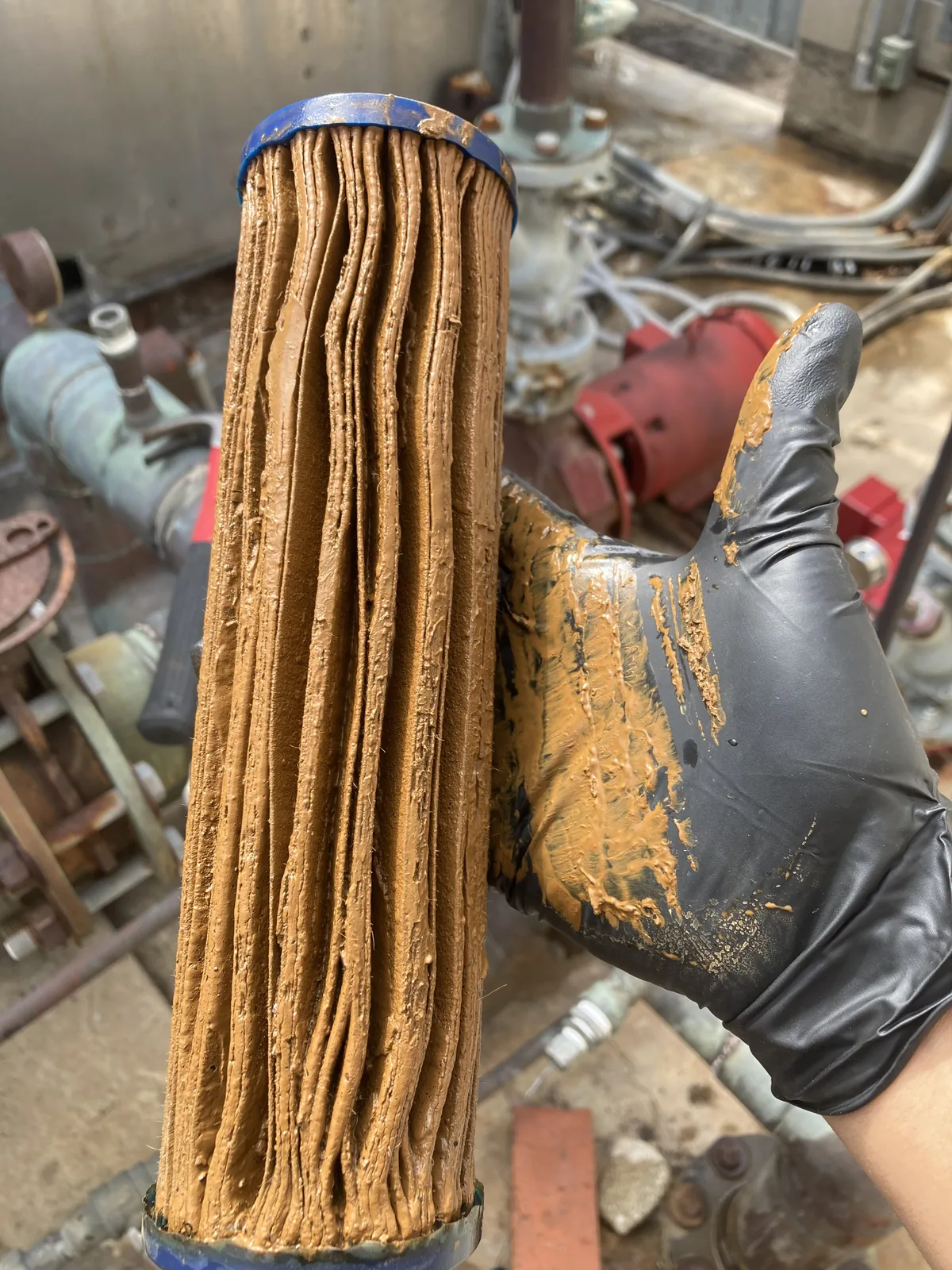
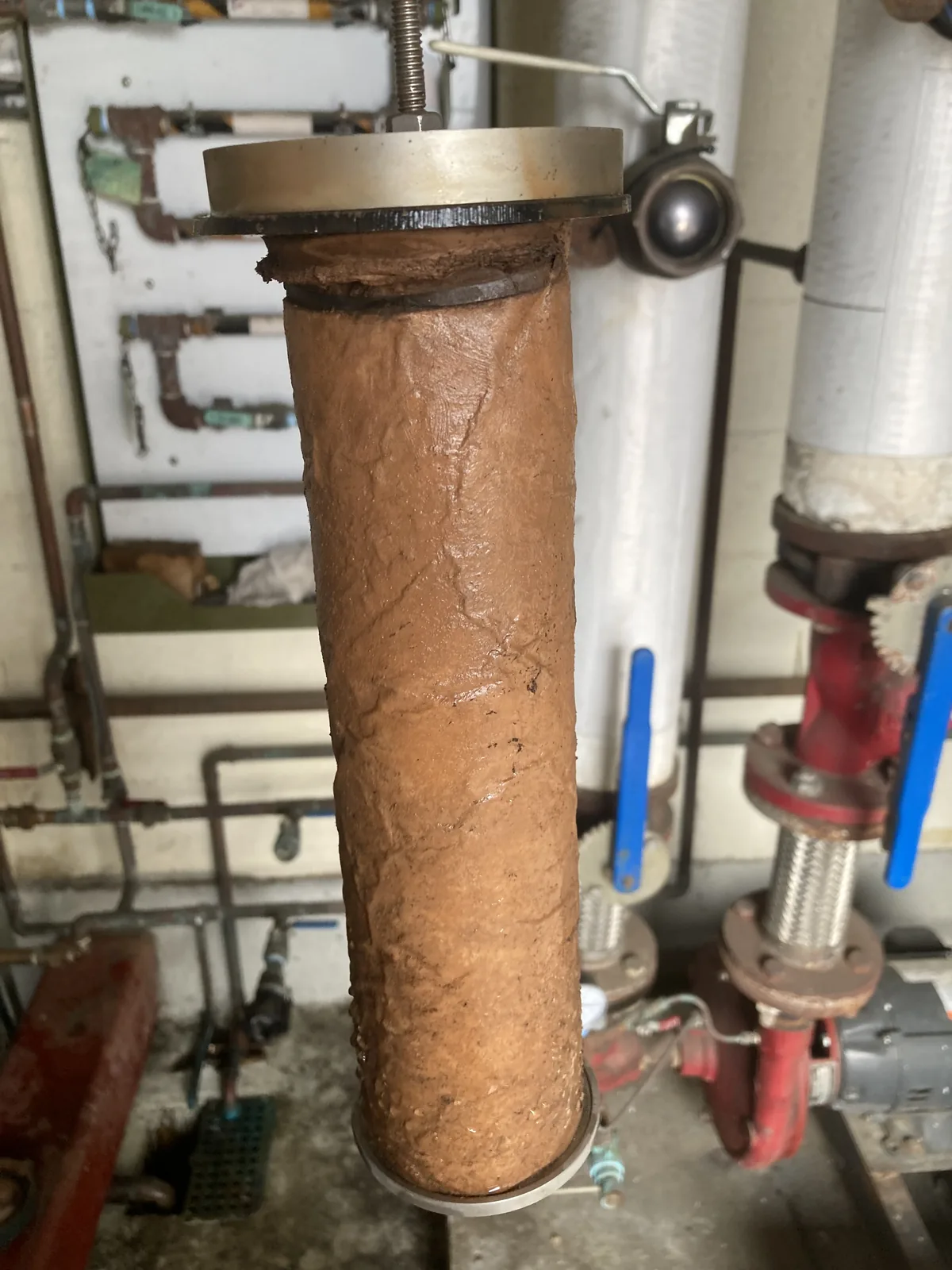
The photos in this post come from buildings we've taken over. Every one of them was paying someone for water treatment service. This is what we found when we opened things up.
We're sharing them because most owners never see inside their own systems, and they deserve to know what to look for.
How it gets this bad: the "monthly handshake"
It happens slowly. A tech stops by once a month, tops off the chemical drums, maybe initials a log sheet, and leaves. Nothing gets pulled apart and cleaned. Nothing gets tested in a real lab. The owner gets an invoice, but no report that says what's actually happening in the water.
We call that the monthly handshake. It looks like service. It isn't.
There's also a conflict of interest the U.S. Department of Energy calls out directly. In its cooling tower guidance, DOE warns that "some vendors may be reluctant to improve water efficiency because it means the facility will purchase fewer chemicals," and recommends treatment programs with "regular service reports that provide insight into the system's performance" (DOE Federal Energy Management Program).
Here's what the monthly handshake leaves behind.
1. Clogged filters and strainers
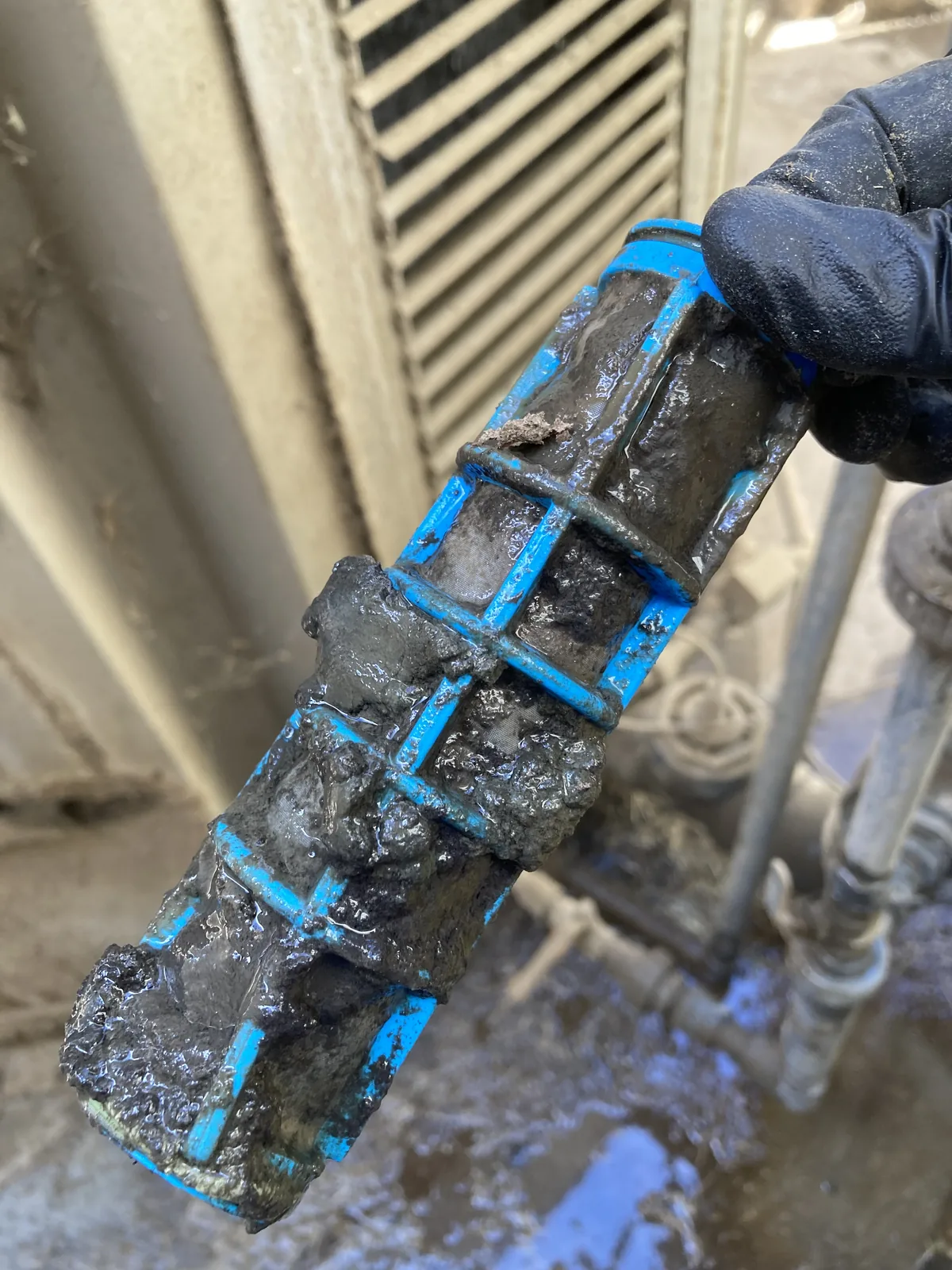
What it is: Filters and strainers catch dirt, rust, and debris before they reach your equipment. When nobody cleans or changes them, they fill up, and water either stops flowing well or finds a way around them.
What it costs you: Pumps work harder to push water through a plugged filter, which means more electricity. Dirt that gets past a failed filter settles in pipes, heat exchangers, and the tower basin.
2. Chemical injection points that don't inject
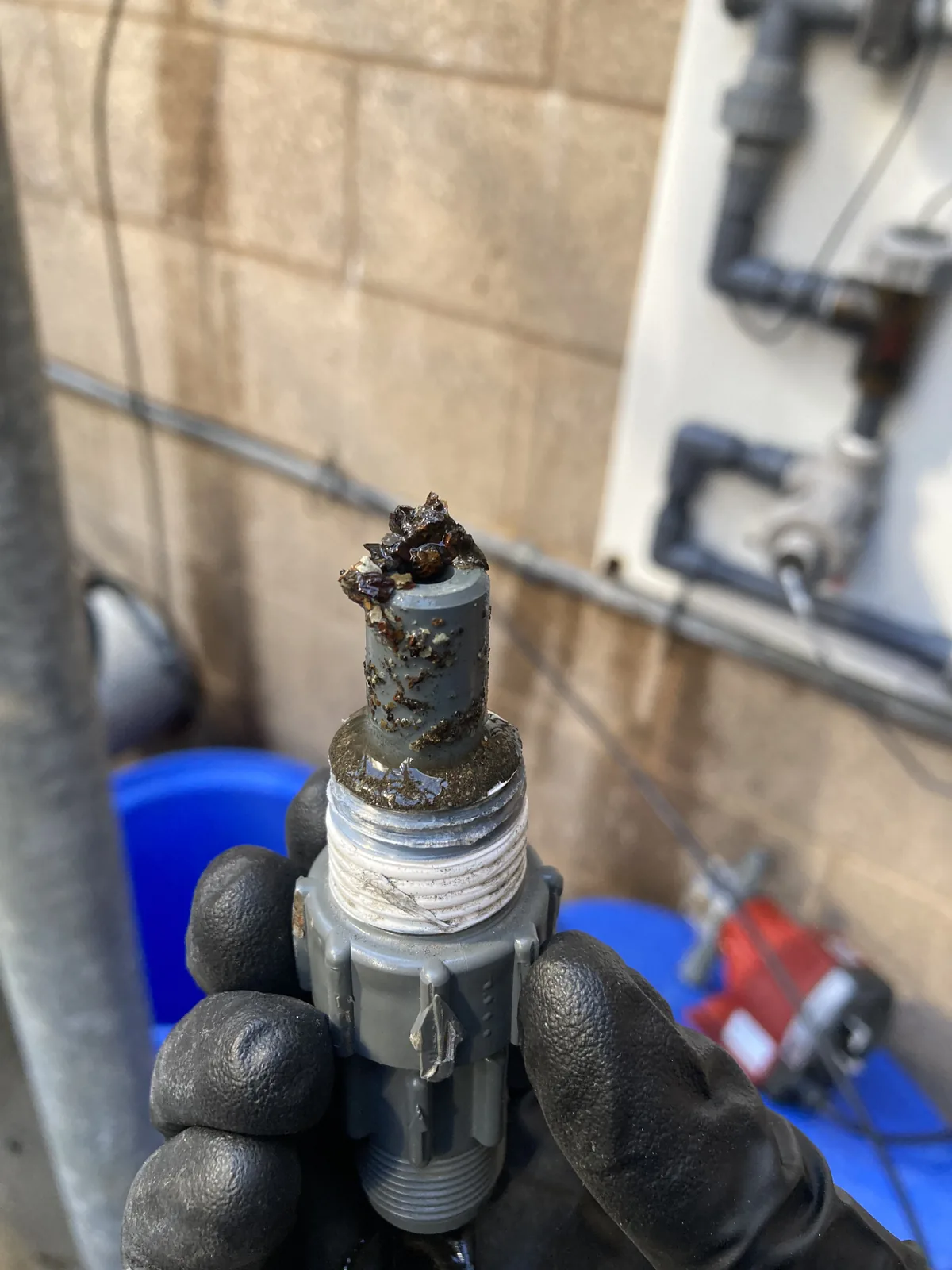
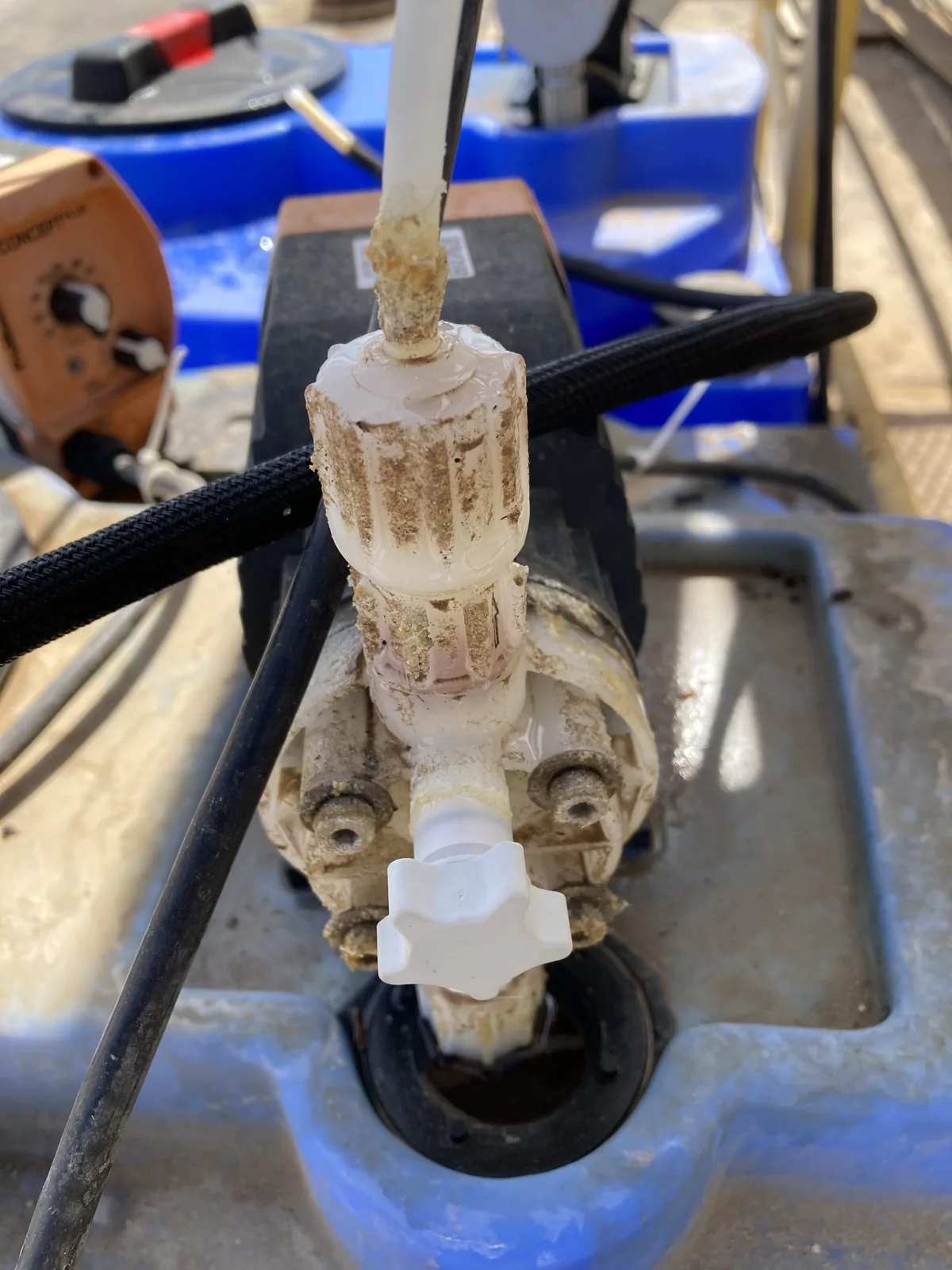
What it is: Treatment chemicals reach your water through a small metering pump and an injection quill. If the quill tip is crusted over, or the pump fittings are leaking and caked with residue, the chemical doesn't get where it needs to go.
What it costs you: You can pay for chemical every month and still have untreated water. The drums go down, the invoices go out, and the scale, corrosion, and bacteria the chemical was supposed to control keep building.
3. Corrosion: the metal is going away
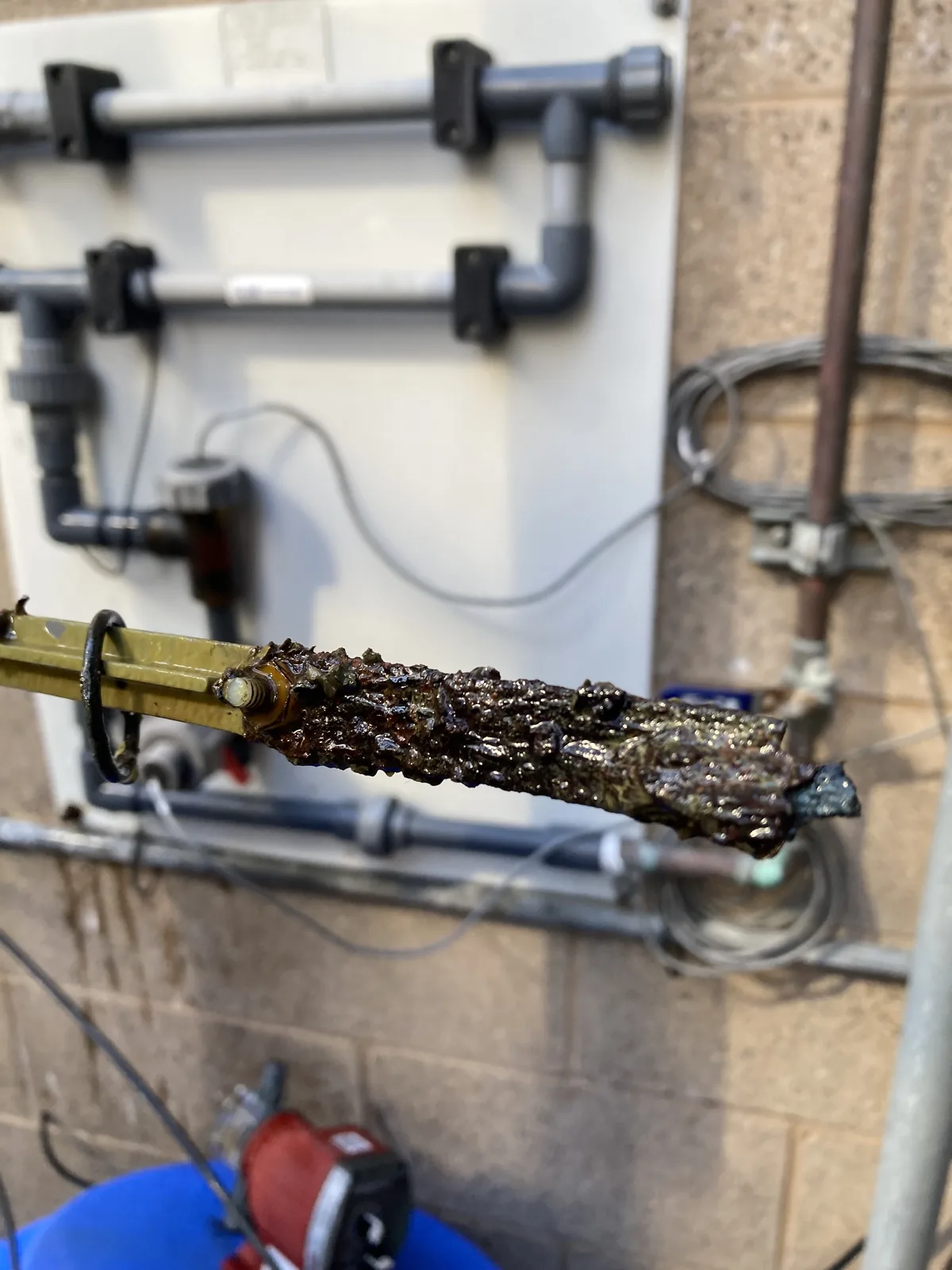
What it is: Corrosion is the slow eating away of metal pipes, tower frames, heat exchangers, and tanks. A good program uses corrosion coupons (small metal test strips) to measure how fast it's happening. A coupon nobody has pulled is a measurement nobody has taken.
What it costs you: Leaks, pinholes, and equipment that wears out years early. Corrosion problems usually show up as a repair bill or a replacement, and by then the damage is done.
4. Plugged cooling tower nozzles
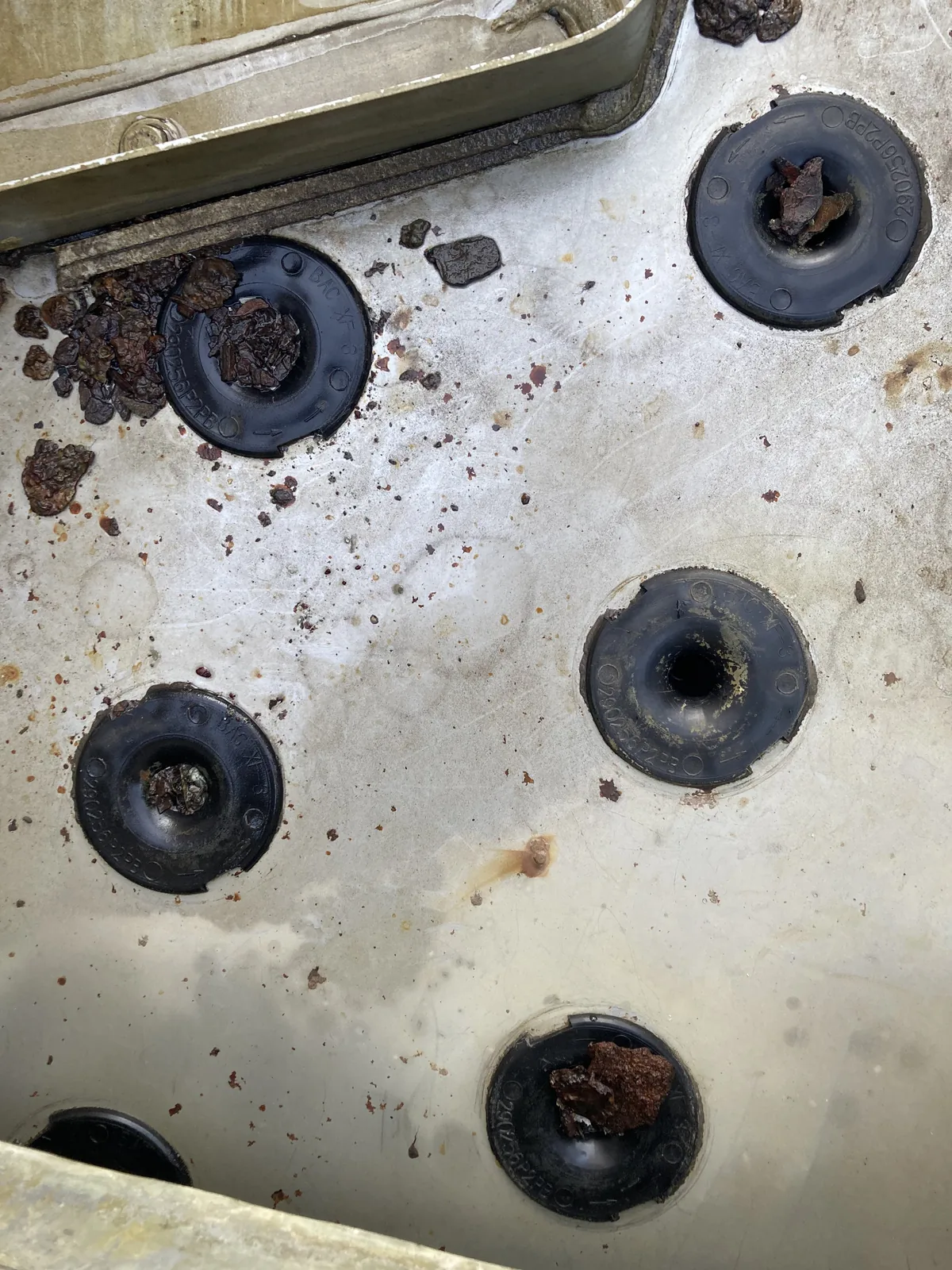
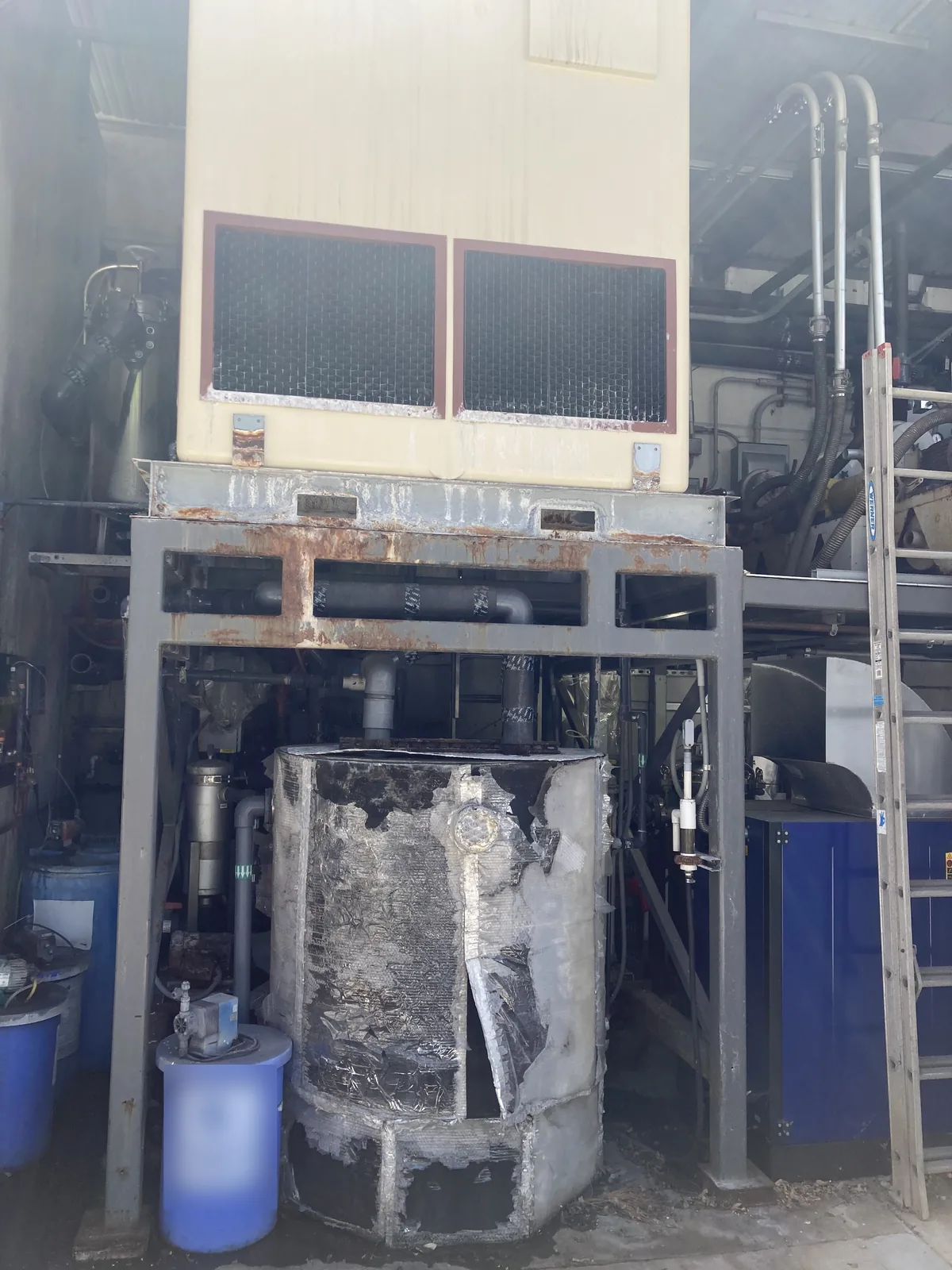
What it is: At the top of many cooling towers, warm water drains through a row of nozzles that spread it evenly over the fill. When nozzles plug, water stops spreading evenly. Parts of the tower run dry while others get flooded.
What it costs you: A tower that isn't spreading water evenly can't reject heat as well, so the chiller works harder and your energy bill goes up.
5. Slime and biofilm
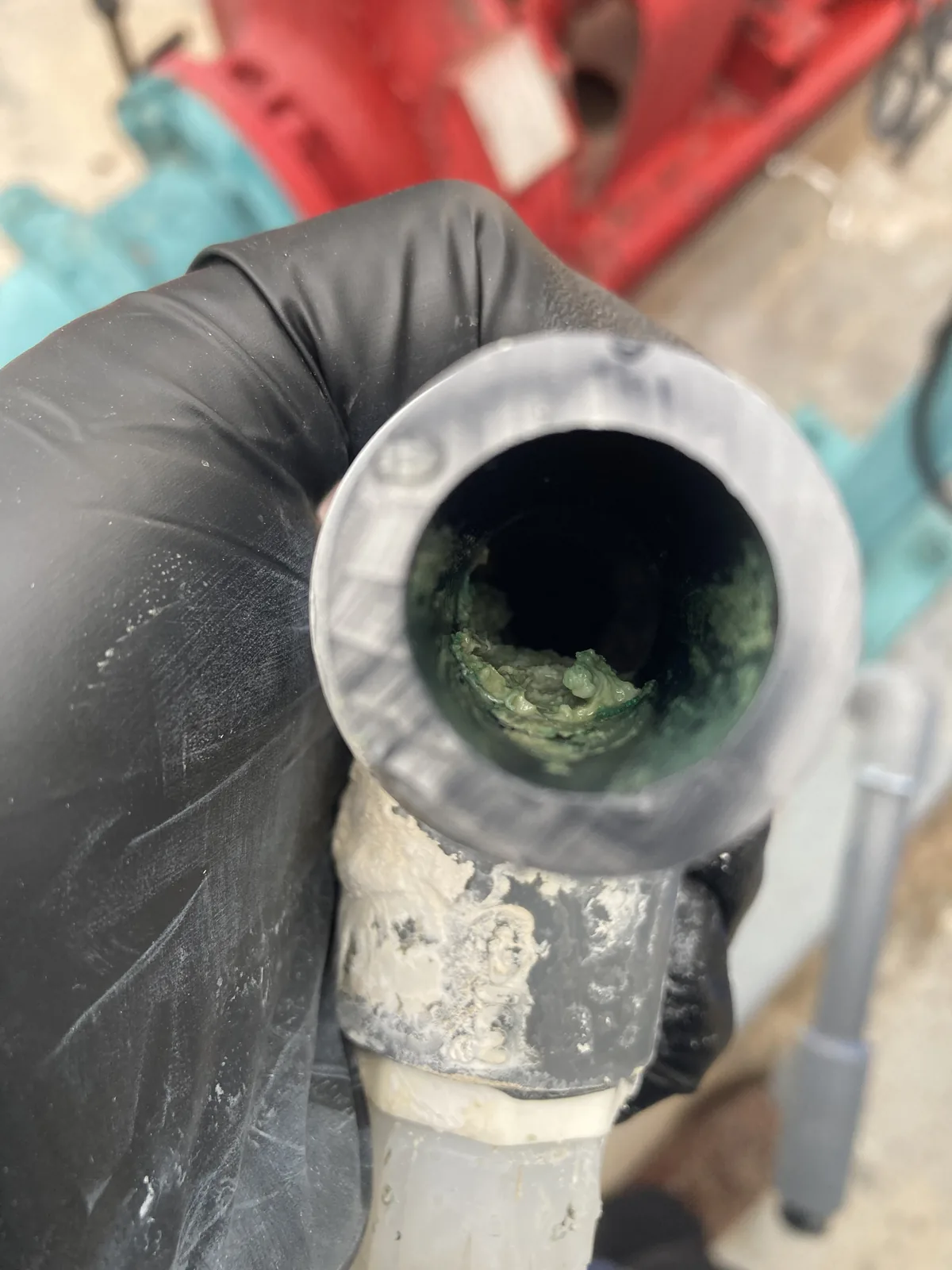
What it is: Biofilm is a slimy layer of bacteria and algae that sticks to wet surfaces. Once it's established, it protects the bacteria inside it from the treatment chemical.
What it costs you: Biofilm makes equipment run less efficiently and feeds corrosion underneath it. Most importantly, it's a health risk. The CDC lists "sediment and biofilm" among the key factors that affect Legionella growth, and says scale, corrosion, sediment controls, and system cleaning "are critical for cooling tower operations and Legionnaires' disease prevention" (CDC).
6. Scale
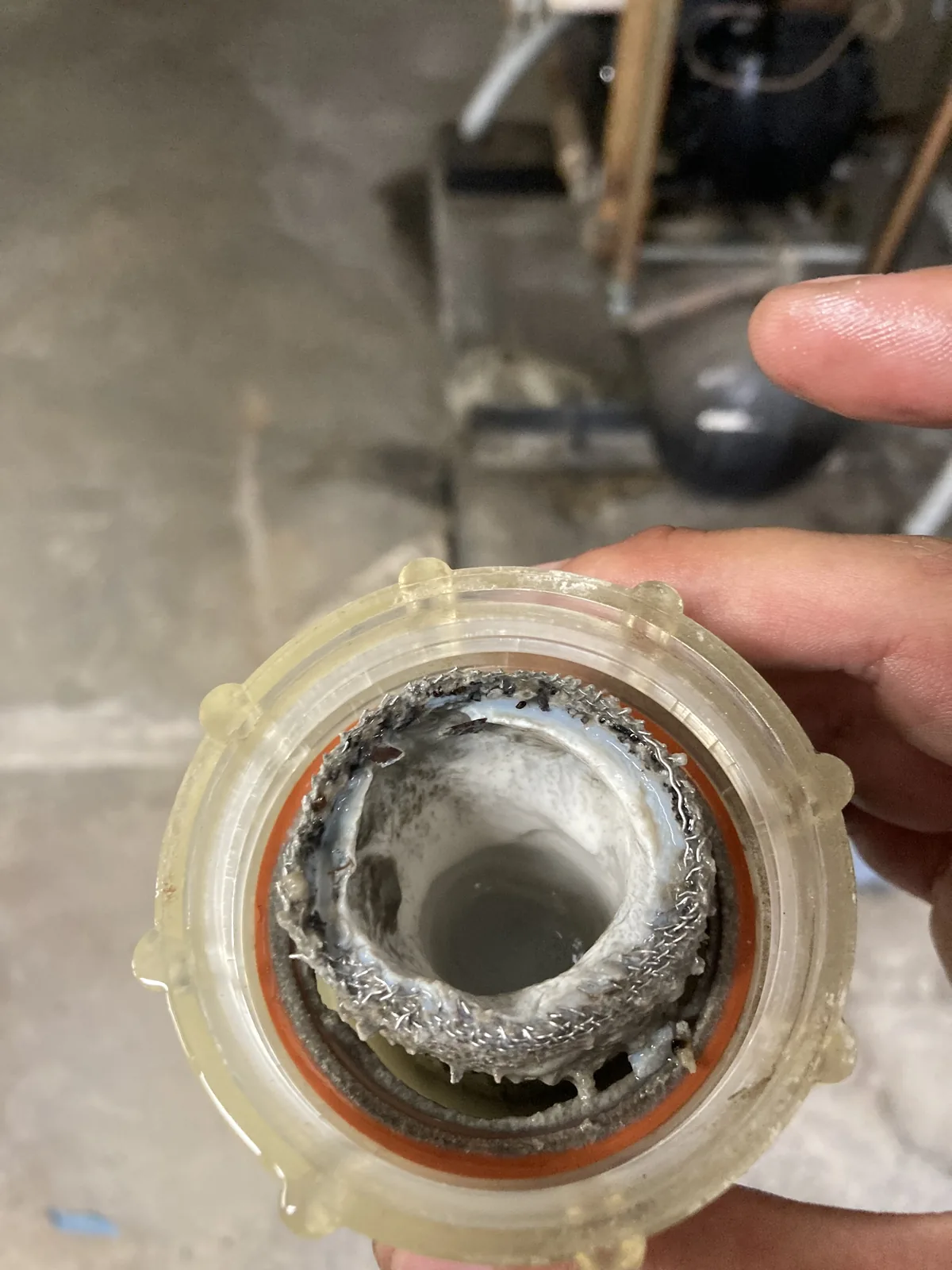
What it is: As tower water evaporates, minerals like calcium stay behind. If blowdown and chemistry aren't controlled, those minerals come out of the water as hard scale on screens, fill, and heat exchanger tubes. DOE explains that when dissolved solids get too high, "the solids can cause scale to form within the system" (DOE FEMP).
What it costs you: Scale acts like insulation on heat transfer surfaces, so chillers burn more energy to do the same cooling. It also narrows pipes and plugs strainers.
What doing the work looks like
We've served 120+ facilities and lost 0 customers because of performance. That's not magic chemistry. It's doing the basics, every visit:
- We pull things apart and clean them. Strainers, filters, quills, and coupons get checked, not just looked at.
- We run our own lab. Water samples, deposits, and corrosion coupons get tested by us, so we know what's actually happening.
- You get a written report after every visit, with real test numbers in plain English.
- One fixed monthly fee, so there are no surprise chemical invoices and no reason for us to sell you more chemical than you need.
When systems are run this way, the savings tend to follow. Across our customers, that's an average of $36K saved per year and a 30% average reduction in water use.
What to check on your own system
You don't need to be an engineer to spot the warning signs. Walk your mechanical room and roof with this list:
- Do you get a written report after every service visit, with actual test results?
- When were your strainers and filters last pulled and cleaned? Ask to see them.
- Are your chemical pumps running, and are the fittings free of crust and leaks?
- Are corrosion coupons being pulled on a schedule, and have you seen the results?
- Look at the top of the tower. Is water spreading evenly, or are some nozzles dry or plugged?
- Any green or brown slime in the basin, on the fill, or in clear tubing?
- Do you have a Legionella water management program, and when was the tower last cleaned and disinfected? (CDC recommends an offline cleaning and disinfection at least once a year.)
If you checked "no" or "not sure" on more than one of these, it's worth a closer look.
Get a free water analysis
Not sure what's happening inside your system? We'll test your water, check the equipment, and tell you in plain English what we find, for free.
Request your free water analysis or call (866) 808-3315.