
Your Commercial Water Softener Is Running, So Why Is the Water Still Hard?
By Hydrovida ·
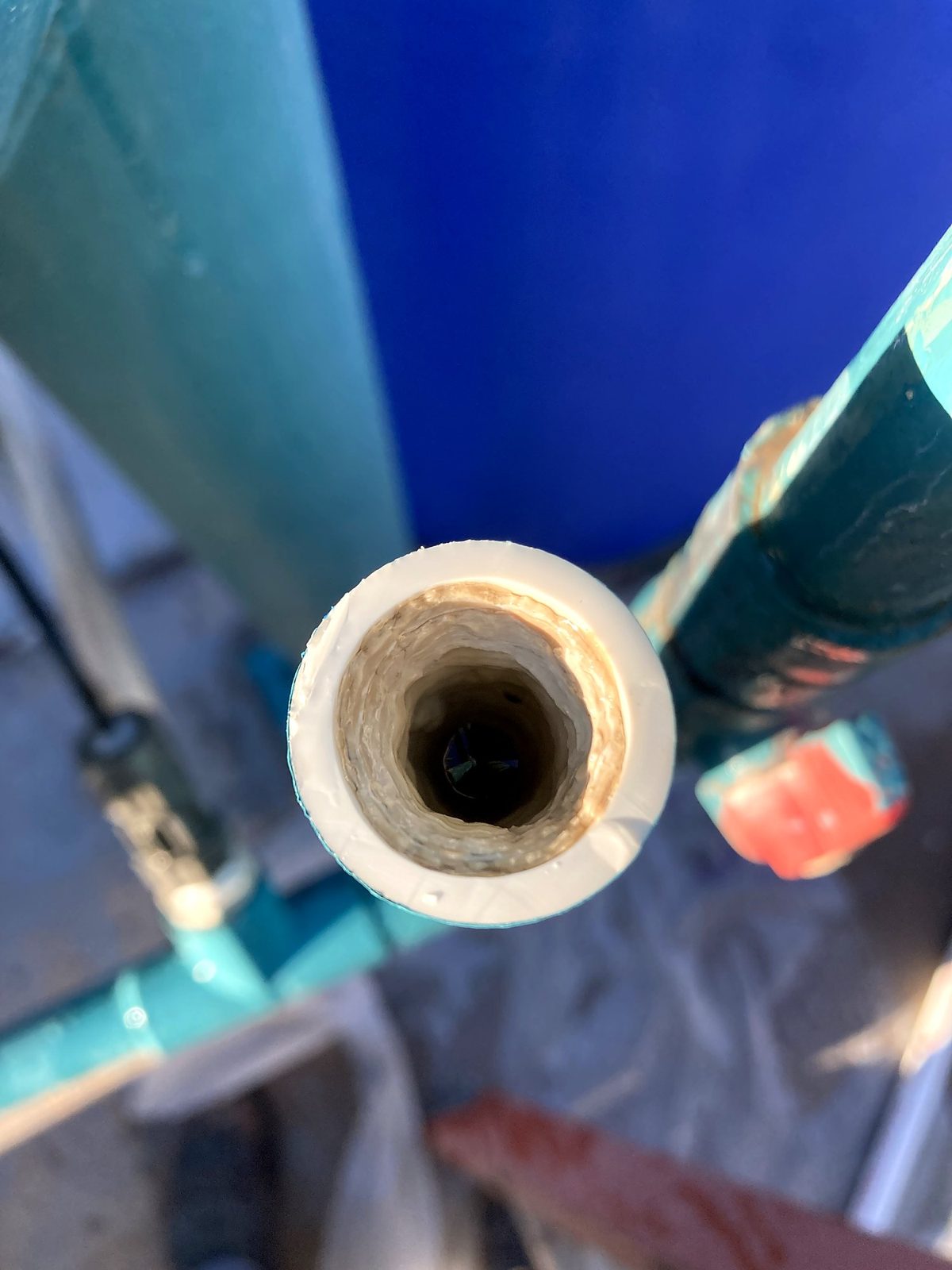
The softener is cycling. The salt is getting used. And there's still white scale on the boiler, the dishwasher and every fixture in the building. This is one of the most common calls we get, and the softener is almost always fixable once you know why it's failing.
A softener that's running isn't the same as a softener that's working. Here are the seven most common causes, in roughly the order we find them.
1. It's set for the wrong water
Softeners regenerate after treating a set number of gallons. That number is calculated from your water's hardness. If it was set years ago, or set for different water, the softener runs out of capacity before it regenerates, and hard water goes straight through. Your water supply can change over time, especially when a utility changes sources.
How to check: test the hardness of your incoming water and compare it to the softener's settings.
2. The resin is worn out or fouled
The resin beads inside the tank do the actual softening. Over time they break down. Chlorine and chloramine in city water slowly damage resin, and iron and manganese coat it so it can't work. Old resin loses capacity, so the softener runs out early.
How to check: test soft water right after a regeneration and again near the end of a cycle. If hardness shows up early, the resin is a likely suspect.
3. The brine tank isn't making brine
The softener can only regenerate with strong brine. A salt bridge (a hard crust with an empty space underneath), mushy salt at the bottom of the tank, or a clogged brine line means the resin never gets fully recharged.
How to check: push a broom handle down through the salt. If it hits a hard layer, you've found a bridge.
4. The valve or bypass is leaking
A worn valve seal, or a bypass valve left partly open, lets hard water mix straight into your soft water.
How to check: test soft water while the system is in service. Any hardness at all is a red flag.
5. Too much flow
Every softener has a maximum flow rate. Expand the building, add equipment or run everything at once, and water can rush through the resin too fast to be fully softened.
6. Regeneration is happening at the wrong time
A timer set wrong, a clock that reset after a power outage, or a meter that's stopped reading can mean the softener regenerates at the wrong time, or not at all.
7. The water is too much for the system
Very hard or high-dissolved-mineral water, like much of Southern California's imported supply, can be more than an undersized softener can handle. Some hardness "leakage" is normal in very high-mineral water. If you need near-zero hardness, for example ahead of a boiler, you may need a different design.
Repair, rebuild or replace?
- Settings or brine problems: an adjustment and a cleanout, often the same day.
- Worn resin or valve parts: a rebuild costs a fraction of a new system.
- Undersized or end-of-life equipment: replacement, sized from a water analysis so it doesn't happen again.
Why it matters
Hard water getting past a softener ends up somewhere. In a boiler, it becomes scale on the tubes, which works like insulation and makes you burn more fuel. In a cooling tower or heat exchanger, it cuts heat transfer. In kitchens and laundries, it wears out equipment early. A softener problem is cheap to fix compared to what it costs downstream.